




Best-selling fully automatic HR2-10 interlocking block making machine
The core principle of the HR2-10 interlocking block making machine is to use hydraulic pressure instead of vibration to compress soil raw materials into high-density, high-strength, non-fired soil bricks using 40 tons of hydraulic pressure. This process is environmentally friendly, pollution-free, and produces bricks with precise dimensions. The HR2-10 clay brick making machine integrates energy conservation, environmental protection, simple production, and low operating costs, making it a brand-new “rapid building construction system.”Currently, soil brick technology is very mature and has been widely used in more than 70 countries and regions in Africa, Asia, and the Americas. It has an international quality authority certification. For individual entrepreneurs and small and medium-sized production and construction companies, the HR2-10 automatic brick making machine is definitely the best choice.
What are the reasons for the global popularity of the HR2-10 interlocking block making machine?
The HR2-10 interlocking block making machine boasts a highly successful “low-barrier, high-return” business model. Firstly, the raw material barrier is low. 90% of the raw material in a high-quality soil brick produced by the HR2-10 interlocking block making machine is soil. This means that the soil in your own yard is the primary raw material for producing soil bricks; there’s no need to purchase or transport it—it can be used directly after digging. Furthermore, the soil bricks produced by the HR2-10 interlocking paver block making machine only require natural curing, eliminating the need for kilns, drying equipment, or other such facilities. Therefore, the profit margin for soil bricks produced by the HR2-10 interlocking block making machine price far exceeds that of traditional fired bricks and concrete bricks.
The soil bricks produced by the HR2-10 interlocking block making machine are known as a “new rapid housing construction system.” Traditional brick-making requires large amounts of cement mortar and demands highly skilled construction workers. The soil bricks produced by the HR2-10 interlocking concrete block making machine have an interlocking design, allowing the bricks to fit together perfectly. This reduces the need for cement mortar and significantly increases construction speed—up to six times faster than traditional brick-making methods.
Compared to a manual brick making machine, the fully automatic HR2-10 interlocking block making machine has a clear advantage in both output and the quality of the soil bricks it produces. The HR2-10 clay brick making machine uses PLC intelligent control for automated production, resulting in a faster and more precise production pace. Furthermore, the entire production line can perform multiple actions simultaneously, including mixing raw materials, producing soil bricks, and stacking them. The key factor contributing to the high strength and quality of the soil bricks produced by the HR2-10 hydraform interlocking block making machine price is its 40-ton hydraulic pressure. This extremely high hydraulic pressure compresses the clay particles more tightly, resulting in high strength and superior quality.
Technical Data
- Tab1
Specification Parameter
| Overall size | 2400*1400*2800mm |
| Shaping cycle | 10-15 seconds |
| Main power | 7.5kw |
| Voltage | 380v/50 hz 3 phase(Adjustable) |
| Production capacity | 700-720 bricks/ per hour |
| Mixer | JQ350 |
| Pressure | 40 tons (adjustable ) |
| Worker | 2-3 Worker |
| Block mould | One set for free |
| Total weight | 1400kgs |
| Color | Customizable |
| Machinery Test Report | Provided |
| Raw material | Clay, soil, cement |
| Place of Origin | Shandong |
| Condition | New |
| After-sales Service Provided | Engineers available to service |
| Product name | HR2-10 interlocking block making machine |
HR2-10 interlocking block making machine production capacity:

What are the advantages and selling points of the HR2-10 interlocking block making machine?

01.High quality block mould
A block mold, as the name suggests, is like a “mold” for clay bricks, determining the shape and size of the clay bricks produced by the HR2-10 clay brick making machine. This allows the HR2-10 automatic brick making machine to produce interlocking clay bricks of 300*150*100mm, as well as 230*220*115mm clay bricks, half-bricks, paving bricks, and more. The mold can also be used to imprint logos on the surface of the clay bricks produced by the HR2-10 interlocking block making machine. The function of the mold can be understood as “change the mold, change the product.”
02.PLC electric control box
The PLC electric control box is the “smart brain” of the HR2-10 automatic brick making machine production line. It precisely controls every production step, turning the process of producing clay bricks, which originally required a lot of labor, into an automated, one-button operation. This ensures fast and stable production of clay bricks and guarantees the consistent quality of the clay bricks produced by the HR2-10 interlocking paver block making machine, eliminating errors caused by manual production.


03.40 tons hydraulic cylinder
Upon receiving instructions from the PLC system of the HR2-10 interlocking block making machine, the hydraulic cylinder generates 40 tons of hydraulic pressure. This powerful force compacts the soil raw material in the mold, producing high-density, high-strength, and smooth-looking soil bricks. This is the most crucial step in the HR2-10 manual interlocking block making machine’s clay brick production process. Simply put, the hydraulic cylinder’s function is to provide hydraulic pressure; without it, soil bricks cannot be formed.
04. Hydraulic Station
During the production of clay bricks by the HR2-10 interlocking block making machine, the Hydraulic Station adjusts and distributes hydraulic oil according to the instructions of the PLC control box, delivering precise power to the hydraulic cylinders to achieve hydraulic actions such as pressing, molding, and demolding. The hydraulic station of the HR2-10 small clay brick making machine adopts constant power variable pump technology, optimizing the hydraulic system and saving 40% of power consumption, while also exhibiting strong stability and durability.


05.High-quality hydraulic oil pipe
The hydraulic hoses connect the hydraulic station and hydraulic cylinders of the HR2-10 interlocking block making machine, delivering high-pressure hydraulic oil to the cylinders to achieve hydraulic forming, demolding, and other hydraulic actions. The hydraulic hoses equipped with the HR2-10 interlocking block making machines have ultra-high pressure resistance and feature double-layer steel wire winding internally for a high safety factor. The highly wear-resistant outer rubber layer adapts to the brick factory environment, providing wear and corrosion resistance. The joints are well-sealed and leak-proof.
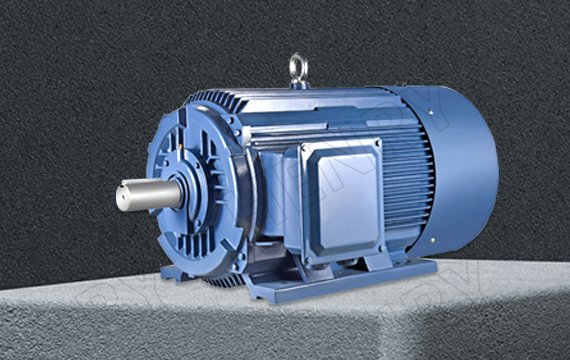
06.Electrical motor
The electric motor, serving as the power source for the HR2-10 interlocking block making machine production line, converts electrical energy into mechanical energy to drive the hydraulic system, mixing system, material conveying system, and more. The HR2-10 clay brick making machine is equipped with a 7.5kW motor, which is highly efficient, energy-saving, and consumes little power, yet provides ample power and stable operation. The motor in the HR2-10 automatic brick making machine has an IP54 protection rating, making it waterproof and dustproof, easily handling the brick factory environment. It also features overload protection, which is crucial for extending its service life.
Advantages of HR2-10 interlocking block making machine


Workers are using soil bricks produced by an HR2-10 interlocking block making machine to build houses.
- Real pictures from the scene

Some soil bricks pictures and parameters (6)

Size:300×150×100mm
2 pieces per mould
480 pieces per hour
3840 pieces per 8 hours

Size:150×150×100mm
4 pieces per mould
960 pieces per hour
7680 pieces per 8 hours

Size:300×150×100mm
2 pieces per mould
480 pieces per hour
3840 pieces per 8 hours

Size:150×150×100mm
4 pieces per mould
960 pieces per hour
7680 pieces per 8 hours
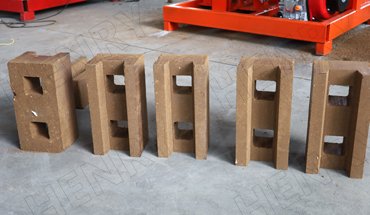
Size:300×150×100mm
2 pieces per mould
480 pieces per hour
3840 pieces per 8 hours

Size:230×220×115mm
2 pieces per mould
480 pieces per hour
3840 pieces per 8 hours
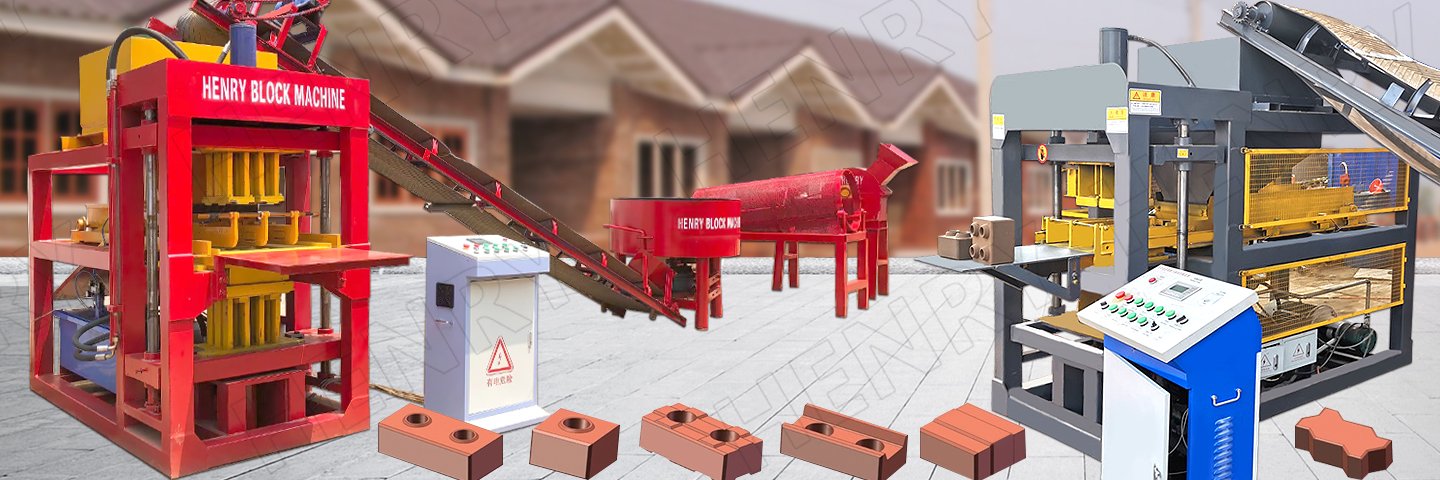
HR2-10 interlocking block making machine can produce different soil clay brick types.
- How is the soil earth interlocking block brick mold formed by complex processing?
- What should you prepare for automatic soil interlocking block making machine operation ?
- Description how is the advantage of Compressed earth hydraform block from soil interlocking brick
- You never Imagine how beautiful after laying with an earth interlocking block making machine to make interlock ?
How should a customer choose the appropriate soil brick type when purchasing an HR2-10 interlocking block making machine?
The advantages of the HR2-10 interlocking block making machine lie in its high output, high hydraulic pressure, and versatility. Therefore, it is advisable to prioritize the popular brick types in the local market. Due to the powerful hydraulic pressure of the HR2-10 clay brick making machine, the soil bricks produced will inevitably be of higher quality and stronger than those from other brick factories, eliminating concerns about market competition.

Some photos of customer visits and shipments of HR2-10 interlocking block making machine


What equipment is needed for a complete HR2-10 interlocking block making machine production line? (5)

Overall size 1500*800*1500mm Max.feeding size 300*400mm Power 5.5kw Capacity 7-10 ton Total weight 320kgs 
Power 0.75kw Capacity 7-10 ton Hole diameter 4mm Total weight 350kgs Dimension 1500*800*1200mm 
Weight 150kgs Size 4500*700*400mm Motor power 1.5kw Belt type “V”type Speed 1.5m/second 
Mixing Motor Power 5.5kw Production Capacity 16m³/h Feed Capacity 350L Efficiency ≥15m³/h Rotating Speed Of Stirring Blade 35r/min Maximum Particle Size Of Bone Particles 8mm/6mm Reducer Model 315 
Size 2400*1000*1300mm Power 2.2KW Voltage 12V*4pcs Working hours 10 hours Operation Electro hydraulic Advantage Strong climbing ability、One button lifting、High stability
Compared to traditional manual brick making machine, the HR2-10 interlocking block making machine achieves a modern, intelligent, and industrialized method of producing soil bricks, significantly increasing production capacity and producing high-quality, uniform bricks. The HR2-10 eliminates the need for labor-intensive assembly line production, reducing production and labor costs. The manual interlocking block making machine requires manual operation at every step, making it difficult to ensure consistent force on each brick, leading to errors and inconsistent quality.
The HR2-10 automatic brick making machine is fully controlled by a PLC control box, standardizing and unifying every production step and hydraulic action, eliminating errors and ensuring uniform size and density of every soil brick. The HR2-10 itself meets high-end industrial standards, using higher standards in steel selection, core components, and welding, resulting in greater reliability, longer service life, and a lower failure rate.
The strength of soil bricks depends on the raw material ratio, the hydraulic pressure of the
clay brick making machine, and the curing method. Adding 8%-10% cement to the soil raw materials can significantly improve the strength of the soil bricks, as well as their service life and resistance to water erosion. The HR2-10 binterlocking block making machine has 40 tons of hydraulic pressure, which can compress the raw materials very densely. After production and proper curing, the strength of the clay bricks can reach 15 MPa, which can meet the strength requirements of load-bearing walls in 2-3 story buildings.
The answer is not uniform, but the core standards are consistent. The curing methods for soil bricks need to be adjusted according to local climate and temperature conditions. If the local climate is hot and dry, the frequency of watering needs to be increased appropriately. If the local climate is rainy and humid, watering once or twice a day is sufficient. The principle of soil brick curing is to maintain moisture for at least 7 days, with a total curing period of approximately 28 days. If the local temperature is low, the curing time needs to be extended.
The answer is yes. According to official statistics from the World Building Organization, building walls with soil bricks produced using the HR2-10 interlocking block making machine is 5-6 times faster than using traditionally fired bricks. This significant difference stems from the unique design of soil bricks. Soil bricks can interlock vertically and horizontally, physically fitting together, resulting in faster construction, less mortar usage, and simpler construction. Ordinary workers can begin construction with minimal training. This new building material, soil bricks, is attractive to both developers and individual home builders.
Research has found that walls built with soil bricks have a certain degree of earthquake resistance. This is because soil bricks have interlocking properties, making the wall more structurally sound. Furthermore, soil bricks come in various shapes, many with pre-drilled holes in the center. Inserting reinforcing bars or filling these holes with concrete greatly enhances the wall’s earthquake resistance.
The answer is not so simple. While the fully automatic HR2-10 interlocking block making machine boasts a high degree of automation, enabling automatic mixing of raw materials, feeding, and hydraulic molding, it still requires a continuous supply of raw materials such as soil and cement. Furthermore, the PLC control box needs monitoring, necessitating real-time monitoring of hydraulic oil temperature, motor overload, and the quality of the produced soil bricks. Finally, the finished soil bricks need to be moved by forklifts. Compared to a traditional manual brick making machine, the HR2-10 clay brick making machine production line significantly alters the workers’ roles, requiring only 2-3 workers for the entire production process.
 English
  Russian
  Spanish
  Arabic
  French