




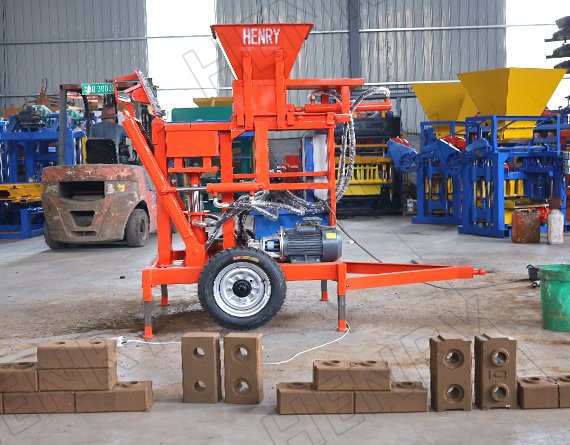
Fully automatic HR2-25 compressed earth brick machine with wheels
Building upon the standard ceb machine, the HR2-25 compressed earth brick machine incorporates wheels and a towing mechanism, significantly enhancing its mobility. This flexible, efficient, and mobile unit is designed for customers who require on-site clay brick production across various project locations and seek automated operations. It is particularly well-suited for projects such as remote area development and post-disaster reconstruction, as the machine can be easily towed to any site. Additionally, the HR2-25 compressed earth block machine offers versatile power options, including a diesel engine or a dual-power (electric and diesel) configuration, further increasing its operational flexibility.
What are the advantages of the HR2-25 compressed earth brick machine?
First, it reduces production costs. The HR2-25 compressed earth brick machine primarily uses clay as its raw material, combined with 8–10% cement; compared to concrete bricks, production costs are 30–40% lower. The clay required for the HR2-25 manual compressed earth block machine does not need to be purchased or transported from afar; instead, local clay can be excavated directly at the construction site and used after simple screening. This use of on-site materials not only cuts raw material costs but also eliminates transportation expenses for those materials. Equipped with wheels and a towing mechanism, the HR2-25 hydraulic compressed earth block machine can be transported directly to the construction site to produce bricks. Once cured, these bricks—which require no firing—can be used immediately for building, thereby solving the issue of transporting finished bricks as well. Consequently, the HR2-25 earth block machine minimizes production costs and ensures substantial profit margins.
Another key advantage is the machine’s eco-friendly, low-carbon nature and its ability to facilitate rapid construction. The HR2-25 compressed earth brick machine produces clay bricks by hydraulically molding raw clay; once molded, the bricks require only natural curing—rather than the energy-intensive firing process used for traditional bricks—making the production process simple and environmentally friendly. Furthermore, the bricks feature a unique interlocking design that allows them to fit together seamlessly on all sides (front-to-back and top-to-bottom). This design significantly reduces construction complexity and greatly boosts efficiency; statistics show that a compressed earth block house with bricks produced by the HR2-25 diy compressed earth block machine is six times faster than building with traditional fired bricks.
The third advantage is automated production, featuring a flexible and efficient mobile production unit. The HR2-25 compressed earth brick machine automates processes such as material feeding, hydraulic molding, and demolding; this saves time and labor while ensuring uniform dimensions for every clay brick. In contrast, manual production often results in inconsistent brick sizes due to variations in applied force, which can negatively impact building construction. With the HR2-25 ceb machine’s automated system, production procedures and actions are standardized, resulting in clay bricks that are uniform and precise in size.
Technical Data
- Tab1
Specification Parameter
| Overall size | 1600*1000*1800mm |
| Shaping cycle | 20 seconds |
| Electric motor power | 5.5KW |
| Unique selling point | Hydraulic system |
| Mixer | JQ350 soil mixer |
| Pressure | 10 tons (adjustable ) |
| Belt conveyor machine | 4m length |
| Worker | 1-2 Worker |
| Block mould | One set for free |
| Total weight | 800kgs |
| Color | Customizable |
| Machinery Test Report | Provided |
| Raw material | Clay, soil, mud, cement |
| Place of Origin | Shandong |
| Condition | New |
| After-sales Service Provided | Engineers available to service |
| Product name | HR2-25 compressed earth brick machine |
| Warranty of core components | 1 year |
HR2-25 compressed earth brick machine production capacity:

Reasons why we recommend the HR2-25 compressed earth brick machine

01.PLC electrical control box
The PLC control box of the HR2-25 compressed earth brick machine functions as a programmable logic controller; with operating programs configured by engineers, the machine operates in strict accordance with these presets during clay brick production. This ensures safety, stability, and precise control, allowing every step of the production process to be executed with accuracy. The PLC control cabinet of the HR2-25 earth brick machine features a high protection rating, effectively preventing the ingress of dust and water. It boasts a well-designed internal layout, utilizes high-quality insulated wiring, and is built with robust materials and exquisite craftsmanship.
02.High-quality tire design
Equipped with tires, the HR2-25 compressed earth brick machine gains enhanced mobility and flexibility, effectively transforming it into a “mobile production plant” that can be easily transported to various construction sites by truck or tractor. The tires equipped on the HR2-25 earth bricks making machine feature high load-bearing capacity, excellent wear resistance, and strong grip, allowing them to easily handle various road conditions.


03.High-quality electric motor
Serving as the “heart” of the HR2-25 compressed earth brick machine, the motor converts electrical energy into mechanical energy to power the production process. It drives the hydraulic system, which generates the pressing force needed to instantly compact the raw clay material within the mold, resulting in precisely dimensioned clay bricks. The motor featured in the HR2-25 compressed earth block press utilizes an advanced electromagnetic design to deliver optimized torque and superior energy conversion efficiency; it is characterized by high performance, stability, power, and reliable quality.
04.Solenoid valve
During the production of clay bricks by the HR2-25 compressed earth brick machine, the solenoid valves receive commands from the PLC control unit and precisely regulate the flow and pressure of the hydraulic fluid to execute hydraulic operations, such as material feeding, pressing, and demolding. The solenoid valves equipped on the HR2-25 earth block press feature rapid response speeds—with response times under 10 milliseconds—as well as stable operation and excellent sealing performance; their modular design saves space and facilitates installation and maintenance.

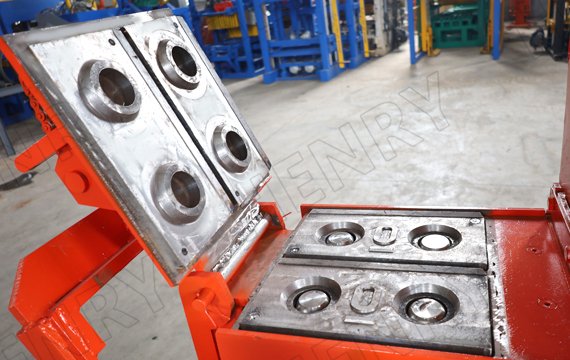
05.Block mould
The mold of the HR2-25 compressed earth brick machine directly determines key specifications—such as the dimensions, shape, number of cavities, and cavity arrangement—of the clay bricks produced, ensuring high precision and uniformity for every brick. Furthermore, the machine’s interchangeable mold capability is a major selling point; a single HR2-25 compressed earth block machine unit can be equipped with multiple mold sets, allowing for the production of different brick types simply by swapping the molds.
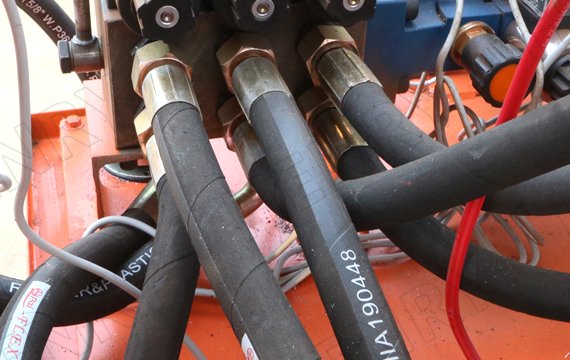
06. Hydraulic oil pipe
As a crucial component of the HR2-25 compressed earth brick machine’s hydraulic system, the hydraulic hoses are responsible for conveying hydraulic fluid from the pump to the various hydraulic cylinders, thereby driving operations such as material feeding, compression molding, and demolding. The hydraulic hoses equipped on the HR2-25 manual compressed earth block machine are designed to withstand high pressure and offer excellent resistance to pressure surges; they feature a multi-layer high-strength steel wire reinforcement and an outer layer made of specialized synthetic rubber that is resistant to both wear and corrosion.

07. High-capacity hopper
The hopper is located at the top of the HR2-25 compressed earth brick machine. During the production of clay bricks, the raw clay material inside the hopper falls by gravity into a material cart; this cart slides back and forth to fill the lower mold box, completing the material distribution process and ultimately producing high-quality clay bricks. Since the hopper of the HR2-25 hydraulic compressed earth block machine is in constant contact with moist raw clay, the inner walls are treated with a wear-resistant coating; the hopper also features non-stick properties, ensuring smooth material discharge.
What are the main features of the HR2-25 compressed earth brick machine?


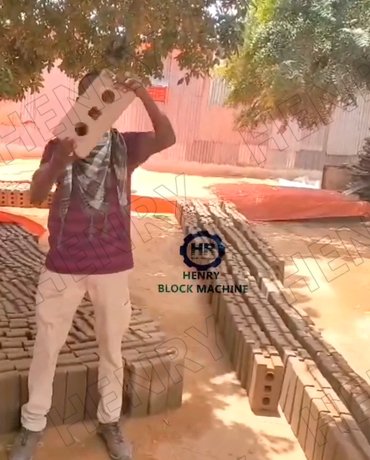
Construction workers use soil bricks produced by HR2-25 compressed earth brick machine to build houses
- Real pictures from the scene

Some clay soil bricks pictures and parameters (6)

Size:230×220×115mm
2 pieces per mould
360 pieces per hour
3000 pieces per 8 hours
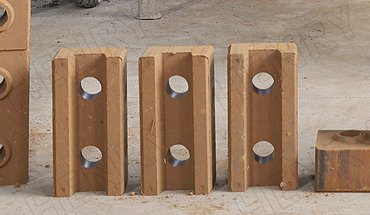
Size:300×150×100mm
2 pieces per mould
360 pieces per hour
3000 pieces per 8 hours
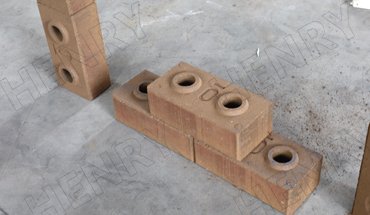
Size:300×150×100mm
2 pieces per mould
360 pieces per hour
3000 pieces per 8 hours

Size:300×150×100mm
2 pieces per mould
360 pieces per hour
3000 pieces per 8 hours
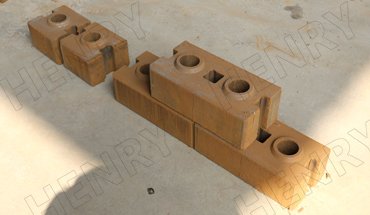
Size:300×150×100mm
2 pieces per mould
360 pieces per hour
3000 pieces per 8 hours

Size:150×150×100mm
4 pieces per mould
720 pieces per hour
6000 pieces per 8 hours

HR2-25 compressed earth brick machine can produce different clay soil bricks types
- How to set best compression ratio for different types of soil / earth with auto compressed earth brick machine?
- How to adjust sensors for operating HR2-25 full automatic soil earth compressed earth brick machine
- How to move down a hollow fence block made by compressed earth brick machine ?
- How many different types of compressed earth soil interlocking blocks can a single compressed earth block machine produce?
Do the clay bricks produced by the HR2-25 compressed earth brick machine require firing?
The answer is that no firing is required. The clay bricks produced by the HR2-25 compressed earth brick machine are a type of compressed brick. They rely on cement hardening and physical compaction; the machine’s 10-ton pressing force compresses the raw clay material tightly. During the subsequent curing process, the cement within the bricks reacts with water (hydration), binding the clay particles firmly together to form a solid, high-strength unit. As the hydration reaction progresses, the bricks reach their maximum strength after 28 days of proper curing.

Customer case studies for the HR2-25 compressed earth brick machine


HR2-25 compressed earth brick machine What other supporting equipment is needed for a complete production line (5)
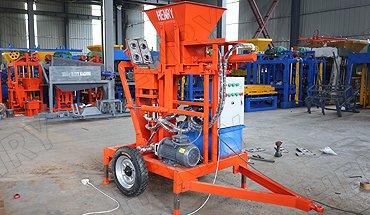
Overall size 1600*1000*1800mm Shaping cycle 20 seconds Electric motor power 5.5KW Unique selling point Hydraulic system Mixer JQ350 soil mixer Pressure 10 tons (adjustable ) Belt conveyor machine 4m length Worker 1-2 workers Block mould One set for free Total weight 800kgs 
Overall size 1500*800*1500mm Max.feeding size 300*400mm Power 5.5kw Capacity 7-10 ton Total weight 320kgs 
Power 0.75kw Capacity 7-10 ton Hole diameter 4mm Total weight 350kgs Dimension 1500*800*1200mm 
Mixing Motor Power 5.5kw Production Capacity 16m³/h Feed Capacity 350L Efficiency ≥15m³/h Rotating Speed Of Stirring Blade 35r/min Maximum Particle Size Of Bone Particles 8mm/6mm Reducer Model 315 
Weight 150kgs Size 4000*700*400mm Motor power 1.5kw Belt type “V”type Speed 1.5m/second
The HR2-25 compressed earth brick machine compresses a mixture of clay and cement under 10 tons of hydraulic pressure to form bricks of uniform size and specifications. Following a curing process—during which the cement within the raw materials undergoes complete hydration—the bricks achieve a strength of 10–15 MPa. These bricks hold South African Agrément certification and are officially recognized under African building material standards as suitable for use in housing construction. Bricks produced by the HR2-25 compressed earth block machine achieve a strength exceeding 10 MPa, far surpassing Nigeria’s minimum construction requirement of 4 MPa. Tests conducted by African building research institutes and laboratories indicate that these bricks are suitable for various applications, including load-bearing walls for multi-story buildings, courtyard walls, and infill walls for high-rise structures.
Proper curing determines the final strength of the clay bricks produced by the HR2-25 compressed earth brick machine; therefore, the post-production curing process is crucial. The key to curing lies in maintaining moisture to ensure a complete hydration reaction between the cement and water. We recommend placing freshly produced bricks in a cool, shaded area away from direct sunlight and spraying them with clean fresh water once or twice daily—increasing the frequency if the local climate is hot and dry. After seven days of such curing, the bricks will achieve 60% to 90% of their ultimate strength, highlighting the critical importance of this initial period. Curing should continue up to the 28-day mark, at which point the bricks reach their maximum strength. Once curing is complete, gently tap two bricks together; a crisp, clear sound indicates high strength and quality, whereas a dull sound suggests insufficient strength.
First, it saves physical effort and reduces reliance on manual labor. As the name implies, the fully automatic HR2-25 compressed earth brick machine enables automated production; workers simply operate the controls, while the machine automatically handles material feeding, compression molding, and demolding. Workers only need to transport the finished clay bricks to the curing area, resulting in a seamless workflow and high production efficiency. In contrast, manual brick-making machines require every step of the process to be performed by hand, creating a heavy dependence on manual labor and resulting in lower efficiency. Second, there is the issue of product consistency. Because the HR2-25 earth block machine uses program-controlled precision to ensure uniform material feeding and compression force, the resulting clay bricks are consistent in size. With manual machines, however, the bricks are compressed by hand; since it is difficult for workers to apply the exact same amount of force every time, variations in the finished bricks can occur.
First, the speed of house construction is significantly faster. The clay bricks produced by the HR2-25 compressed earth brick machine feature an interlocking design, making the building process as simple as assembling toy blocks; constructing a house with these bricks is six times faster than using traditional fired bricks. Second, mortar usage is reduced. These bricks interlock both vertically and horizontally, creating a very stable structure and drastically cutting down on the amount of mortar required. While the first course of bricks is typically laid on a mortar bed, subsequent layers require only minimal mortar, resulting in an overall mortar saving of 70%.
The answer is certainly yes. The HR2-25 compressed earth brick machine is powered by electricity; however, for customers located in remote areas with no power supply or unstable electricity, a diesel-powered version is also available. The diesel version offers greater flexibility. Furthermore, based on our engineers’ research, the HR2-25 hydraulic compressed earth block machine can be designed with dual power options—electric and diesel—to meet a wide range of customer needs.
The answer is certainly yes. Our engineers design molds based on customer requirements and use precise calculations to ensure a perfect curve, enabling the HR2-25 compressed earth brick machine to produce curved clay bricks suitable for constructing curved walls. In contrast, traditional fired bricks come in standard rectangular shapes that cannot be customized, making it difficult to meet this requirement.

 English
  Russian
  Spanish
  Arabic
  French