


The rise and development of soil brick in the Democratic Republic of Congo is a process of “international aid stimulating local demand.” From 1998 to 2003, after the end of the Second Congo War, houses, roads, factories, hospitals, schools, and other buildings were severely damaged, and the Democratic Republic of Congo entered a very difficult post-war reconstruction phase. A large number of people were homeless, and at that time, extensive deforestation was carried out to produce traditional bricks, causing serious damage to the Democratic Republic of Congo’s forest resources (the second lung of the earth).
At this time, the United Nations Development Programme, the United Nations High Commissioner for Refugees, and various religious charities stepped in to provide the first batch of imported soil bricks for the construction of model buildings such as schools and hospitals. At that time, the use of compressed bricks in the Democratic Republic of Congo was very limited, and foreign experts possessed the technology.
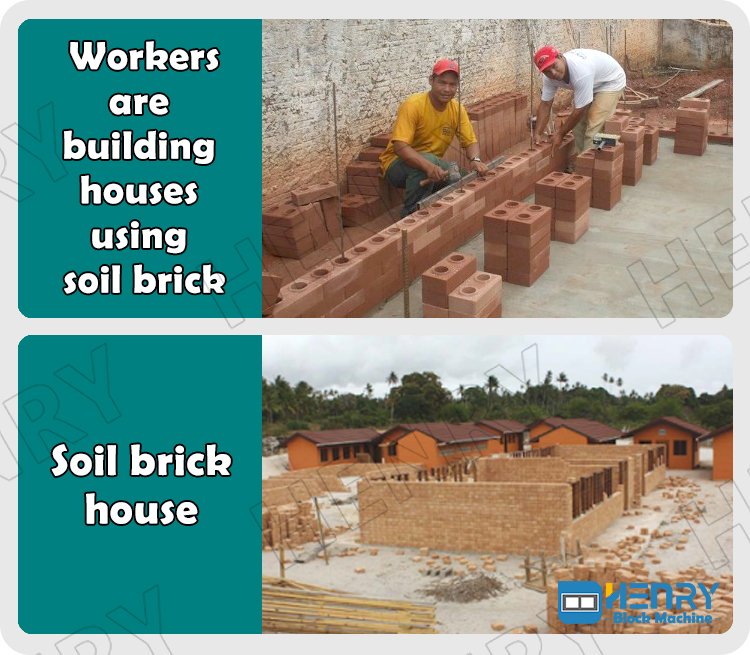
In 2000, the excellent results of houses built with soil brick, initially aided by foreign countries, attracted the attention of the Democratic Republic of Congo’s government, organizations, and local entrepreneurs. Small-scale clay brick production plants emerged in cities like Kinshasa and Lubumbashi. Through technical research on facing bricks and training in masonry construction, hand making bricks have expanded from residential buildings and walls to community and small commercial buildings. Compared to cement bricks, soil bricks, with their advantages of faster production and easier construction, have formed a local supply chain. Especially in the earthquake-prone North Kivu province of the East African Rift Valley, old clay bricks, with their unique interlocking structure, enhance the overall integrity of buildings and offer greater earthquake resistance than concrete bricks, making them very popular in the region.
In recent years, soil brick technology has spread and developed rapidly in the Democratic Republic of Congo. Especially after the eruption of the Nyiragongo volcano in 2021, soil bricks, with their advantages of simple raw materials, fast production speed, and quick construction, were used to build temporary shelters. The rapid spread of information online has also allowed the people of the Democratic Republic of Congo to understand the technological advantages of compressed bricks. Through various successful cases, soil brick have gradually moved from specific project uses to becoming a mainstream building material in the Democratic Republic of Congo, and the types of bricks are also increasing.

Why has soil brick production developed so rapidly in the Democratic Republic of Congo? What is the soil like in the Democratic Republic of Congo, and is it suitable for producing soil bricks?
First, how to make bricks from clay
The process of producing soil bricks is quite simple. Suitable soil is selected, mixed with cement and water to form the raw material, which is then placed into molds in an automatic brick making machine, pressed into shape, and cured for 28 days. This completes the production process. Therefore, the first step in hand making bricks production—soil selection—is crucial. Next, we will explore the soil of the Democratic Republic of Congo.
The first area we will explore is the tropical rainforest region of the central basin in the Democratic Republic of Congo.
The soil types in this region are mainly red soil and brick-red soil, which are typically red or reddish-brown. This is a product of the high temperature and high humidity of the tropical rainforest climate. The soil is rich in iron and aluminum oxides, and its texture is mainly sticky particles with a granular structure. It is one of the best and ideal raw materials for producing soil brick.
The soils in the tropical rainforest region of the Central Basin in the Democratic Republic of Congo are generally acidic due to the loss of alkaline ions such as calcium and potassium caused by long-term leaching. Furthermore, the local soils contain plastic soil minerals such as kaolinite, resulting in good plasticity. Therefore, this region, with its high-quality red soil, excellent plasticity, and abundant soil resources, has become a “treasure trove” for producing compressed bricks.

So, what challenges do the soils in this region face?
Firstly, there’s the issue of soil organic matter. Tropical rainforests are densely vegetated, and the soil contains a large amount of tree roots, weeds, and humus. This organic matter can affect the molding quality of soil brick and hinder the hydration reaction of cement. Therefore, we can choose to use soil from 1 meter below the surface, which avoids most of the organic matter.
Secondly, the soil in this area is acidic, which slows down the hydration reaction of cement and affects the strength of hand making bricks. We can add a small amount of quicklime to the soil; quicklime is alkaline and can neutralize the soil acidity. Alternatively, we can increase the amount of cement used, as cement can also neutralize the soil acidity.
We have summarized the local process for producing soil bricks.
Step 1: Select a suitable production area and excavate to a depth of 1 meter to extract soil.
Step 2: Use a soil sieve machine with a 5mm aperture to sieve the excavated soil, removing impurities such as tree roots, weeds, small stones, and laterite stone.
Step 3: Add quicklime to acidic soil with a pH value less than 5, then let it stand for 1-2 days.
Step 4: Mix the settled soil with cement and water until homogeneous.
Step 5: Workers use a soil brick making machine to press the soil raw material into shape.
Step 6: Cur the pressed coco soil brick for 28 days.
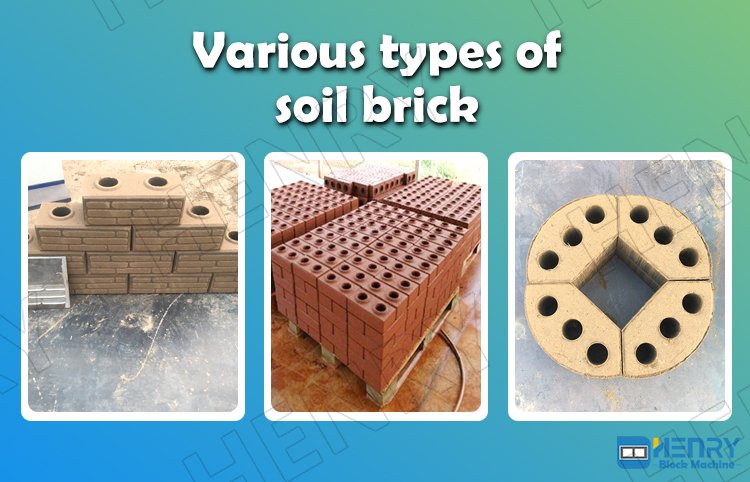
How to inspect the quality of cured soil bricks
In the absence of professional laboratory testing, we can conduct tests using several simple methods. First is the water immersion test: immerse the soil brick produced by the solid bricks machine in water for 24 hours; if the coconut soil brick do not crumble or soften, they are fine. Second is the drop test: drop the cseb bricks from a height of 1.5 m to 2 m; if the bricks do not break, they are fine. Finally, the load-bearing test: stand the soil brick on its side and allow a 70kg-80kg adult to stand on it; if the bricks do not break or show cracks, we can determine that the cocopeat soil brick are of excellent quality.
Next, we will explore the second region: the eastern part of the Democratic Republic of Congo (the Great Rift Valley region).
In the eastern Rift Valley region of the Democratic Republic of Congo, particularly in North Kivu province, the soil is predominantly volcanic ash soil, dark gray to brownish-black in color. Formed from volcanic ash deposits from the eruption of the Nyiragongo volcano, this soil is relatively lightweight, porous, fine-grained, and low in density. It is rich in aluminosilicate minerals and has a neutral pH.
In this region, volcanic ash can be used instead of cement in the production of soil brick using a soil brick machine. This is the biggest advantage of sand lime bricks production in the area; the reduced use of cement lowers the production cost of local compressed bricks by 30%-50%, a significant advantage.

Soil bricks made from volcanic ash are lightweight, making them earthquake-resistant and providing good insulation. Houses built with these bricks are also well-insulated and resistant to erosion. The volcanic ash from local eruptions is a significant local resource, deposited deeply and in large quantities.
The soil in this region has fine, uniform particles and low density, which also leads to a lack of coarse aggregate. Therefore, we can add coarse sand or volcanic ash to the raw materials. This provides a framework for hand-making bricks, increasing their strength. The optimized raw material solution for the local soil is:
60% volcanic ash + 30% volcanic ash + 5% cement
This raw material solution is based on years of experience by local builders. Secondly, clay bricks made from volcanic ash require high levels of maintenance due to their slow hydration reaction. Therefore, we can extend the curing time by covering the clay bricks with plastic sheeting to keep them moist for 15-20 days. This allows the hydration reaction to complete completely. Then, place the clay bricks in a cool, well-ventilated place for another two weeks to complete the curing process.

The HR4-10 clay soil brick making machine and HR2-10 compressed brick machine, developed and manufactured by HENRY, can produce differenttypes of red bricks with high output and strong pressing force. For a brick making machine price list, please feel free to email us, and we will provide you with detailed information on clay bricks making machine price in india at different price points and with varying outputs.
Next, we will explore the third region: the Katanga Plateau in southeastern Democratic Republic of Congo.
The Katanga Plateau region in southeastern Democratic Republic of Congo is rich in mineral resources, especially copper and cobalt. The local soils, influenced by mining, are predominantly ferruginous and lateritic soils with low clay content. Mining activities have also resulted in the soils containing mineral waste, heavy metals such as copper and cobalt, making them relatively infertile.
Therefore, the local soil presents both opportunities and risks. Converting mineral waste into building materials is a highly efficient and economical solution, but it also requires rigorous testing of the slag, including pH value and sulfur content. The testing standards refer to the World Health Organization’s standards for the leaching toxicity of building materials. Only when the safety of the slag is ensured can it be mixed with soil and stabilizers to form raw materials for the production of soil brick.

Based on local soil conditions, Henry recommends the following raw material ratio:
60% safe slag + 30% local soil + 10% cement
To develop the local soil brick market, Henry suggests the first step is to prioritize safety, using soil from areas far from the mines to ensure safe production. The second step is to conduct a systematic study of the mine slag, collaborating with local government organizations, research institutions, and mining companies to establish safe production standards. The third step, after perfecting production standards and regulatory systems, is to gradually use slag to produce soil bricks, achieving resource recycling.
Therefore, the Katanga Plateau region in southeastern Democratic Republic of Congo is not merely a matter of whether compressed bricks production is suitable, but also a question of resource recycling, sustainable development, and the formation of a green and environmentally friendly industrial chain for this resource-rich region. We should adopt a rigorous and scientific approach. Soil brick technology can not only create economic benefits locally and solve the problems of housing difficulties and high construction costs for local residents, but also improve the local ecological environment and achieve resource reuse. This is highly beneficial for builders, local residents, the government, and the ecological environment.

Next, we will explore the fourth region: the alluvial plains of the Democratic Republic of Congo.
The alluvial plains of the Democratic Republic of Congo are formed by long-term river flooding and sediment deposition, consisting of upper and lower layers. The upper layer, composed of more recent sediment deposits, is high in clay and organic matter. The lower layer, formed by ancient riverbed deposits, is predominantly sandy. Therefore, the local soils are characterized by high plasticity, high water content, and significant variations in soil composition. They contain expansive minerals and, due to their proximity to rivers, have high water content and humidity.
Therefore, the soil in the alluvial plains of the Democratic Republic of Congo must be improved before it can be used to produce soil brick.
The first step is soil screening, selecting soil from deeper layers as much as possible, as these have lower organic matter content. Impurities such as tree roots and shells are then removed. After screening, the soil is sun-dried to reduce its moisture content.
The second step is soil improvement. Adding coarse aggregate to the soil provides a framework for the soil bricks, enhancing their strength. Coarse aggregate is typically selected from 0.5mm-2mm coarse sand or small gravel smaller than 5mm. Next, stabilizers such as cement and lime are added to the soil. 2%-5% slaked lime and 10%-15% cement can be added. Lime can reduce the expansion of clay minerals.

The third step is to adjust the production process of the soil brick. First, mix lime with finely granulated, uniform soil and let it stand for 24-48 hours. Then add cement and water, and perform a “kneading test” to ensure a moisture content of 8%-12%. During the curing period of the soil bricks, maintain high humidity for 14 days, then move the bricks to a cool, shaded place to continue curing.
HENRY’s recommended improved formula for alluvial soil:
45% screened alluvial soil + 40% 0.5-2mm coarse sand + 12% cement + 3% slaked lime
Overall, the soils of the Democratic Republic of Congo are very suitable for producing soil brick, especially the red soils of the tropical rainforest region in the central basin and the volcanic ash soils of the eastern region (the Great Rift Valley). These two types of soil are ideal natural materials for producing compressed bricks, which makes the Democratic Republic of Congo a model country for green and sustainable development in the world. The key to success lies in the local government and builders fully leveraging their local advantages, adapting to local conditions, actively learning advanced technologies, and adopting a scientific development perspective.

The future prospects of soil brick technology in the Democratic Republic of Congo are very promising. Under the premise of advocating green environmental protection and protecting forest resources globally, soil bricks, which are low in production cost, resource-saving, and do not require firing, will inevitably receive local policy support. Moreover, the soil resources in the Democratic Republic of Congo are of very high quality and abundant.
In modern times, the Democratic Republic of Congo has experienced rapid population growth, becoming the second most populous country in Africa. Its population is projected to exceed 200 million by 2050. This rapid population growth and urbanization will inevitably lead to an increasing demand for housing, making low-cost and easy-to-construct soil brick extremely attractive.
Currently, the Democratic Republic of Congo still relies on imports for cement and steel, while compressed bricks require only a small amount of cement in their production, making the building materials supply chain more localized and secure. In the next 5-10 years, hand making bricks will become a crucial building material in the Democratic Republic of Congo, especially in rural areas, where their market share will exceed 30%. Soil brick technology will be a far-reaching industry in the Democratic Republic of Congo.

FAQ
01. What are soil brick?
Soil bricks are the result of research and development in soil and mechanical technologies by South African engineers in the late 20th century. The core concept is to use soil and cement, formed through compression, which allows for low-cost production, environmental protection, emission reduction, and simple construction. Compared to traditional brick making, producing compressed bricks can save 90% of energy, reduce production costs by 30%-40%, and increase construction speed by 50%. After curing, soil brick can reach a strength of 10-15 MPa and have advantages such as sound and heat insulation, and resistance to rain erosion, making them very practical for building houses and walls.
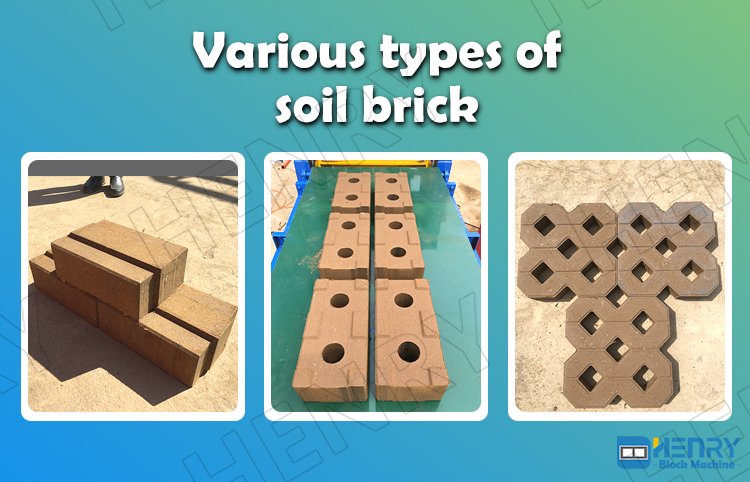
Today, the shapes of soil brick have evolved from a single type to a wide variety. The most common soil brick size is 230*220*115mm, and the soil brick weight is 9-11 kg. Now, there are also double-hole interlocking bricks, U-shaped bricks, curved bricks, paving bricks, and more. Hand making bricks have evolved from simply meeting basic housing needs to offering diverse functions, practicality, and aesthetics.
02. Can houses built using soil brick meet the building standards of the Democratic Republic of Congo?
The answer is yes. Currently, the Democratic Republic of Congo’s building standards mainly reference French and African regulations, requiring building materials used for house walls to have a strength higher than 3-5 MPa. Cured soil brick can reach a strength of 10-15 MPa, fully meeting the load-bearing requirements of a three-story building. Secondly, the standards require uniform dimensions of building materials. Compressed bricks are produced using standardized molds, ensuring uniform size and minimal error, fully meeting the Democratic Republic of Congo’s building standards.
03. What are some successful examples of houses built using soil brick in the Democratic Republic of Congo?
First, in North Kivu province of the Democratic Republic of Congo, UNESCO built rural schools, hospitals, and other public facilities. Second, in the suburbs of Kinshasa, the DRC government built over 200 affordable housing units using soil brick, with local residents also participating in the production of these bricks, creating numerous jobs. In Lubumbashi, Glencore Mining used interlocking stabilized soil blocks to build dormitories for its employees. In Ituri province of the DRC, the International Committee of the Red Cross used cseb bricks to build temporary housing for disaster-stricken families. The “Congo Hope Village” project outside Lubumbashi also built 150 homes, schools, community facilities, and hospitals; this project was nominated for the “Africa Sustainable Human Settlements Award” in 2021.
04. Does producing soil brick require electricity? What if there is a power shortage or unstable power supply in the area?
There are three methods for producing soil brick. First, there’s the manual mode, where workers manually press levers to produce bricks, such as the HR2-40 soil brick making machine. This is inexpensive, but power shortages result in low output, and insufficient pressing force leads to poor brick density. Second, there are electrically powered solid bricks machine, which offer high production efficiency and high pressing force, producing stronger soil bricks, such as the HR2-10 automatic brick making machine and HR10-10 automatic brick making machine. Finally, there are diesel-powered clay soil brick making machine, powered by diesel engines, which solve the local power shortage problem, such as the HR2-25 clay soil brick making machine and M7M1 compressed brick machine.

05. How much cost can soil brick save compared to traditionally fired bricks?
Firstly, there’s the cost reduction in energy. Soil brick don’t require firing, saving on energy and transportation costs. Secondly, construction with soil bricks is simpler, faster, and significantly reduces cement usage. Thirdly, compressed bricks production produces no environmental pollution, eliminating the need for environmental remediation costs. Therefore, overall, hand making bricks can save 30%-40% in costs compared to traditionally fired bricks.
 English
  Russian
  Spanish
  Arabic
  French