


Compressed earth blocks technology originated in South Africa in 1980. At that time, rising brick-making costs in South Africa led to a severe housing shortage. In response, South African engineer John Laing developed low-cost, non-fired clay bricks in 1980. After its invention, compressed earth blocks technology quickly gained popularity among builders across Africa, especially in Ghana. Since Ghana’s independence in 1957, its economy has experienced rapid development, and urbanization in Accra and other major cities has accelerated, creating significant challenges to housing. The prices of traditional concrete bricks and fired bricks have risen, and Ghana was heavily reliant on imported cement at the time.
In 2006, the Ghanaian government launched a national strategy for “affordable housing.” With the government’s support, Ghanaian builders, recognizing the suitability of South African compressed earth blocks technology for Ghana, adopted the technology. Subsequently, hundreds of homes were constructed using earth blocks as model projects, demonstrating the feasibility of the earthen blocks solution to the Ghanaian government, people, and builders. Since then, earth blocks produced by the earth blocks machine have become popular in Ghana and have quickly spread throughout the country and even across West Africa.

So, what is the composition of Ghana’s soil, and is it suitable for producing compressed earth blocks? Next, HENRY will analyze this question in depth.
Ghana has a diverse range of soil types, primarily composed of sandy soils, silt, and clay. Based on climate and geology, Ghana’s soil types are mainly divided into five regions. First, there are the sandy and saline-alkali soils of the southern coastal region and the Lagoon Plain; second, the red tropical weathered soils of the western and southern central provinces; third, the red and yellow soils of the northern Ashanti and eastern provinces; fourth, the expansive Vertisols soils of the northern grasslands, including the Northern and Savanna provinces; and finally, the alluvial soils of the Volta River basin.
How do we determine if local soil is suitable for producing compressed stabilized earth blocks? First, take a small amount of soil and knead it in your hand. If it can be easily formed into a ball and doesn’t crumble easily, it’s preliminarily considered high-quality soil, ideal for producing earth terminal blocks. For more professional and accurate data, the soil must be precisely tested in a laboratory. This allows for precise measurements of particle size distribution, maximum dry density, plasticity index, pH value, and organic matter content.

Next, let’s explore the soil composition of five major regions in Ghana and whether they are suitable for producing compressed earth blocks.
First, let’s explore the tropical rainforest region of the Western Province and the southern part of the Central Province in southwestern Ghana. This area is characterized by red soil, formed from ancient rocks over millions of years of weathering, and is classified as oxidized or leached soil.
The soil has a balanced ratio of sand, silt, and clay, achieving a golden ratio of 70:20:10. Furthermore, the iron and aluminum oxides in the soil act as natural binders, enhancing the strength of the produced interlocking compressed earth blocks and reducing the risk of cracking. The red color of the local soil is proof of its iron and aluminum oxide content. The widespread distribution and deep layers of red soil in this region make it easy to excavate, making it the best and most ideal area for earth blocks production.
The soil conditions in this region are excellent, but we still need to follow scientific production methods. First, the top 30cm of soil is removed; this depth contains abundant plant roots and organic matter. Second, the optimal moisture content and plasticity index range of the soil are determined through experiments. Because the local red soil contains iron and aluminum oxides, the amount of cement used in the production of compressed earth blocks can be reduced, generally by 6%-8%. Finally, the red soil may be slightly acidic, which can be neutralized by adding lime.
The tropical rainforest regions of the West Province and the southern part of the Central Province in southwestern Ghana were among the first to promote earthing blocks. The local builders are experienced, the natural environment is excellent, and there is an abundance of production equipment and technical personnel, making it the most perfect region in Ghana for producing earth retaining blocks.
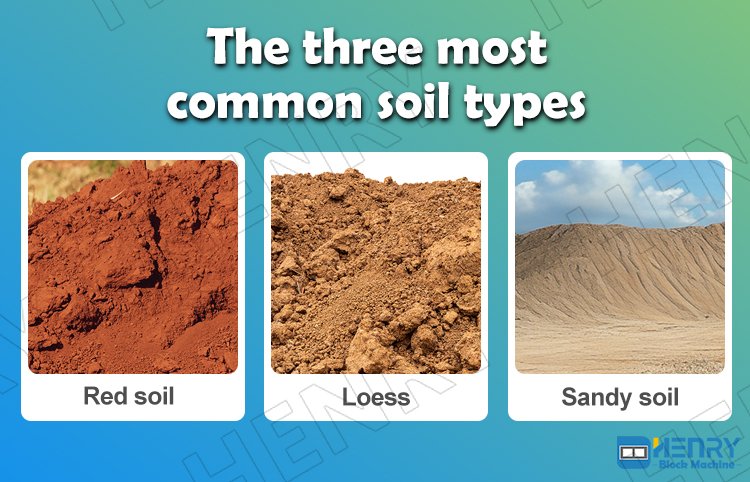
Next, let’s examine the southern coastal region of Ghana and the Lagoon Plain. The soil in this area is primarily sandy, formed by seawater and wind transport. It has coarse particles, with less than 5% clay particles, a high quartz content, and high salinity due to seawater intrusion. Therefore, Henry determined that the soil in this region is unsuitable for producing rammed earth blocks.
Although the soil in this region is not ideal, it can be improved through soil amendment techniques, provided the following requirements are met:
01. A moderate proportion of clay particles in the soil.
02. Good binding properties, with a plasticity index of 5-15.
03. Soil salinity below 0.5%.
First, soil is transported from neighboring areas and mixed with local soil in a 3:7 ratio. Second, lime and cement should be used in amounts of 10%-15%, and tree roots, shells, weeds, and other debris in the soil must be thoroughly removed. Henry suggests that non-load-bearing compressed earth blocks for landscaping purposes can be produced locally. However, stabilized earth blocks require a longer curing time after production, so building manufacturers in this region need to carefully calculate production costs; otherwise, high production costs could easily lead to project failure.
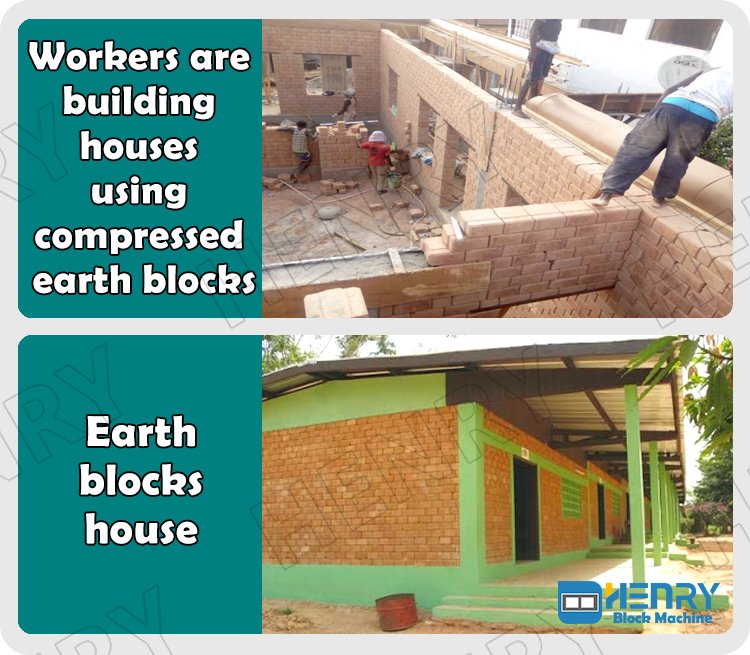
Next, we will examine the savanna region of northern and eastern Ashanti Province in Ghana. This area is located in a forest-steppe transition zone, and the soil type is tropical savanna soil. This soil has been influenced by a hot and rainy climate year-round. Rainwater and heat dissolve rock minerals, releasing iron oxides. These iron oxides accumulate and precipitate over a long period, fusing with the soil to form red soil rich in iron oxides. Furthermore, the widespread presence of termites in the area, whose mounds alter the soil’s stratification, typically results in a high content of clay particles. Historically, this type of soil was the preferred building material for the handcrafted production of compressed earth blocks. Having undergone hundreds of thousands of years of weathering and leaching, the local soil system is extremely mature and stable.
The savanna regions of northern and eastern Ashanti Province in Ghana have suitable climate conditions, with distinct dry seasons and abundant sunshine, which is highly beneficial for the later curing of newly produced earth stone blocks. Therefore, the local soil and climate conditions are very suitable for earth vellumental blocks production. However, challenges exist. First, the clay content in the local soil exceeds 30%, which is beyond a reasonable range and may cause excessive shrinkage of the produced earth stabilized blocks during curing. Henry suggests adding an appropriate proportion of sand for mixing. Second, the area is a forest-steppe transition zone with lush vegetation and high organic matter content in the soil. Henry recommends using soil from a depth of 0.5 meters or less for compressed earth blocks production.
In conclusion, the savanna soils in the northern and eastern Ashanti provinces of Ghana are of very high quality and are very suitable for the production of earth block. Moreover, the Ghana Institute of Construction and Roads is located there, and they have conducted many years of research on the local soils, producing very detailed soil data.
Next, we will focus on the grassland regions of Ghana’s Northern Province and Savannah Province. The soils in this area are predominantly leached and poorly developed soils, a type heavily influenced by the local climate. The region has a tropical savanna climate with annual rainfall of 800-1000 mm. The rainy season is concentrated with heavy rainfall, but the dry season is long and has high evaporation rates, leading to drought. The leaching of rainwater during the rainy season, combined with evaporation during the dry season, causes mineral-rich water to rise to the soil surface, accumulating over time to form leached and poorly developed soils.
The soil in this region is distinctly sandy, with ample sand content, and may contain minerals such as illite and montmorillonite. It possesses strong plasticity, which is beneficial for the molding of electrical earth blocks. Furthermore, the local vegetation is sparse and low in organic matter, allowing for less stringent requirements when excavating the soil.
The local soil also presents certain drawbacks. First, the high evaporation rate during the dry season leads to chloride buildup in the soil layer, affecting the durability of compressed earth blocks. Second, the dry environment during the dry season necessitates precise control of the water addition during brick production; otherwise, the bricks are prone to cracking during curing. Henry advises local builders to test the soil salinity before producing earth vellumental temple blocks, avoiding saline soils – this is crucial.
Overall, the grassland areas of Ghana’s Northern and Savannah provinces have good soil quality and adaptability, making them highly potential for producing excellent compressed earth. The region’s red soil, leached soil, and low organic matter content, provided that the soil is properly screened and the raw materials are scientifically proportioned, make it ideal for using earth blocks machine to produce high-quality earth blocks price, which can then be used to build a high-quality earth blocks house.

Let’s now turn our attention to the Volta River basin in Ghana. The Volta River originates from the high mountains of northern Ghana, carrying a large amount of fine sand and silt, which are slowly deposited in the river basin, forming a strip-like distribution. The soil texture is distinct, with high organic matter content and abundant, easily accessible soil sand.
However, the soil in this region also has significant drawbacks. First, the soil composition is inconsistent, with distinct soil layers, resulting in varying compositions in each layer and making it difficult to guarantee a uniform and stable supply of soil raw materials. To obtain uniform soil raw materials, large-scale soil excavation, screening, and mixing are necessary. Second, the floodplains are rich in expansive soils such as montmorillonite. Compressed earth blocks produced using this soil in an earth blocks machine are prone to shrinkage and cracking. Therefore, Henry determined that using the soil from the Volta River basin in Ghana for earth blocks price production carries a high risk. If local builders insist on trying, Henry has three suggestions:
01. Find areas with stable texture and uniform soil composition.
02. Conduct soil composition testing and pre-produce compressed earth blocks.
03. Establish a soil raw material pretreatment system.

Finally, there is the Accra Plain region of Ghana, located on the southern coast of Ghana. It is covered with sandy soil with an organic matter content of less than 1%. Further inland from the southern coast of Ghana, there are tropical red soils rich in iron and aluminum oxides, with a pH of 5.5-7.0, which are slightly acidic.
The formation of this soil is due to both local natural climate conditions and human activities. First, Accra, Ghana, has a tropical wet and dry climate, with hot and rainy weather during the rainy season, receiving 800-1200 mm of precipitation, and scarce rainfall and high evaporation during the dry season. Second, Accra is the capital of Ghana and the country’s economic, financial, and cultural center, with a dense population. The continuous expansion of urban construction and extensive development of agricultural land have further altered the soil structure.
The coastal sandy soils with low organic matter content and the inland red soils rich in iron and aluminum oxides are both ideal for producing compressed earth blocks using an earth blocks machine. The sandy soils have low clay content, while the red soils have ample clay particles. Accra, Ghana, is also one of the regions where earth blocks production is highly developed. Its superior soil conditions, developed economy, dense population, and high demand for earth blocks bangalore have resulted in numerous successful examples of private residences, government projects, and schools built with earth blocks near me.

Based on the above analysis, we can conclude that the soil in most parts of Ghana is mainly red soil and sandy soil, which is very suitable for producing compressed earth blocks. For example, the tropical rainforest areas in the western and southern central provinces of southwestern Ghana, the savanna areas in the northern and eastern Ashanti provinces, the grassland areas in the northern and Savanna provinces, and the Accra Plain region are all rich in red soil containing iron and aluminum oxides, making them the best areas for producing earth blocks.
The Ghanaian compressed earth blocks market currently holds immense potential. The Ghanaian government plans to build 300,000 affordable housing units, facing a significant housing shortage and a pressing need for building materials. Furthermore, earthy blocks offer economic advantages, making them ideal for budget-conscious users.
In recent years, the Ghanaian government has been actively attracting foreign investment and compressed stabilized earth blocks technology to develop its construction industry and promoting the establishment of a national quality certification system to regulate the quality and standardization of earth terminal blocks. Currently, local builders should seize the opportunity and plan ahead to capture the future market, as the Ghanaian rammed earth blocks market has a very optimistic outlook and enormous potential.

FAQ
01. How strong are compressed earth blocks?
The strength of earth stabilized blocks produced by the earth blocks machine is influenced by a variety of factors, the core of which include the quality and proportion of the soil raw materials, the pressing force during the production process, and post-construction curing.
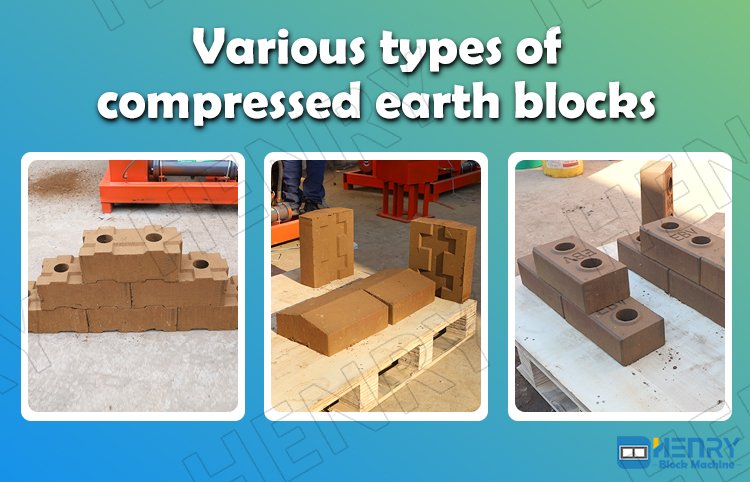
First, suitable soil raw materials need to be selected, and appropriate amounts of cement and water are added. The raw materials are then pressed into shape using the powerful pressing force of a brick-making machine. HENRY recommends the HR4-10 earth blocks machine, which has a pressing force of 60 tons. Such a high pressing force can compress the raw materials to a very high density, making them very strong, and it has a large output, with a daily output of up to 12,000 earth blocks india.
After earth vellumental temple blocks are pressed into shape, they need 28 days of scientific curing. This allows the earth blocks uk to reach a strength of 7-15 MPa, which is sufficient for building load-bearing walls in 3-4 story residential buildings.
02. Is it true that the more cement you add to the raw materials for producing compressed earth blocks, the better?
The answer is no. Adding a scientifically appropriate proportion of cement to the soil raw materials is the correct approach.
Firstly, cement is relatively expensive in Ghana, and excessive use of cement would increase production costs and reduce market competitiveness. Furthermore, adding too much cement can lead to a violent hydration reaction, easily causing cracks in compressed earth blocks ceb. Therefore, in Ghana, the scientifically recommended range for cement usage is between 5% and 10%, depending on the local soil composition.

03. Are compressed earth blocks currently popular in Ghana?
In recent years, earth blocks have gained increasing attention in Ghana, showing rapid growth potential. Traditional fired bricks are facing a crisis due to their high cost, significant resource waste, environmental pollution, and slow construction speed. In Ghana, there are examples of earth blocks for sale being used in the construction of a six-story hotel, and higher education institutions such as the Winnipeg University of Education are researching and improving earthen blocks technology. In the future, the market for compressed stabilized earth blocks in Ghana is bound to continue to improve.
04. Are the earth blocks machine that produce earth blocks difficult to operate? Do workers need professional training?
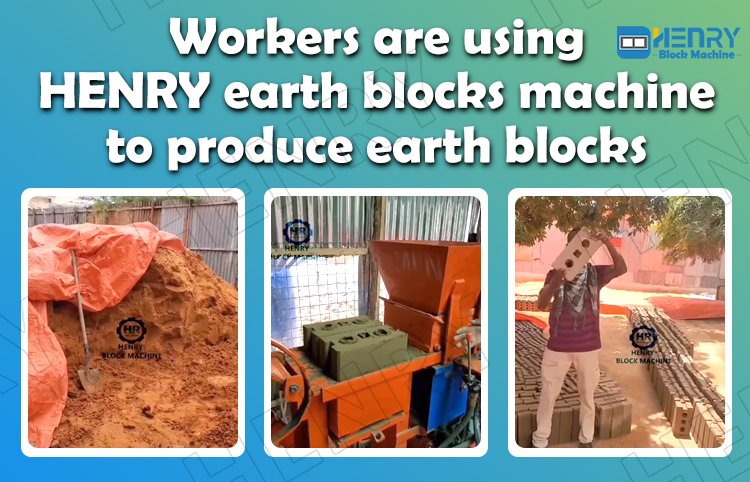
Operating an earth blocks machine for producing interlocking compressed earth blocks is very simple. After purchasing a HENRY earth blocks machine, HENRY provides very detailed instruction manuals and video tutorials on installation, operation, and maintenance. We also have numerous operation videos for different models of earth blocks machine, with every step of the earth block production process meticulously documented.
By following the instructional videos, customers can quickly master the operation. Finally, if customers still have concerns, HENRY can send an engineer to the customer’s factory to install and debug the earth blocks machine and fully train the customer on how to use it before leaving.

05. When building a house using compressed earth blocks, is mortar really not needed?
Compressed earth blocks, due to their unique interlocking design, are very sturdy when they fit together. Therefore, workers using earth stabilized blocks can significantly reduce the amount of mortar needed when building houses. However, this doesn’t mean no mortar is required at all. Mortar is still needed when building the foundation, door and window lintels, and wall finishes. Therefore, using electrical earth blocks can reduce mortar usage by 80%-90%.
 English
  Russian
  Spanish
  Arabic
  French