




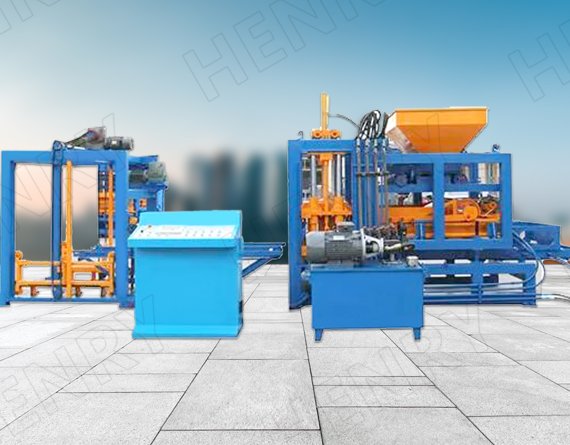

Large-capacity, fully automatic QT4-15 concrete block maker machine production line
The core advantage of the fully automated QT4-15 concrete block maker machine is that it transforms the traditional labor-intensive concrete brick production industry into a highly efficient and high-volume modern intelligent industry through efficient PLC automation control. From concrete raw material batching, mixing, and transportation to concrete brick production and stacking, the entire production process is automated. This not only improves production efficiency and saves a significant amount of labor, but also enhances the standardization of the production process, improves product quality, and reduces the uncertainties of manual production.
What are the advantages of the fully automatic hydraulic QT4-15 concrete block maker machine
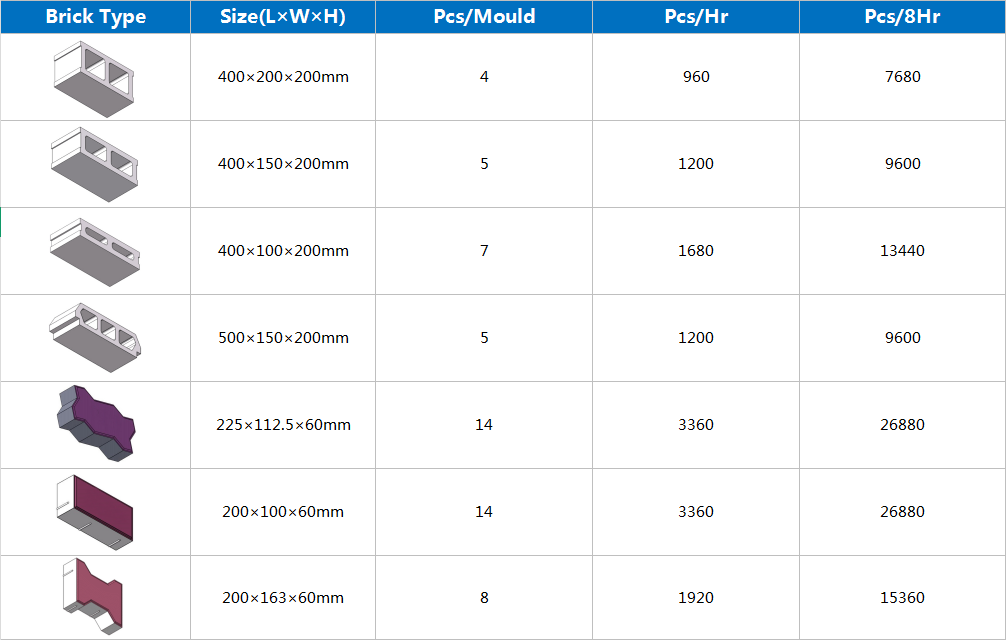
One of the main advantages of the QT4-15 automatic concrete block making machine is its ultra-high output capacity. The QT4-15 concrete block maker machine has a wider body, accommodating fiber trays up to 960*550mm in size, and can form four 400*200*200mm concrete hollow bricks at a time, with a forming cycle of 12-20 seconds. Extrapolating from this, the QT4-15 block making machine can produce 7680 400*200*200mm concrete hollow bricks in 8 hours of operation. This massive production capacity can be automated simply by controlling the AI PLC electrical system.
The powerful vibration force is another major advantage of the QT4-15 concrete block maker machine. Vibration force is a core indicator of a brick-making machine; stronger vibration force improves the quality of concrete bricks, increases production efficiency, and enhances adaptability to concrete raw materials. Compared to the 5.5kW vibration motor of the QT4-20 concrete block making machine, the QT4-15 block machine’s vibration motor has been upgraded to 7.5kW, achieving a vibration force of 55-70kN.
This powerful vibration force can quickly expel air from the raw materials in the mold, resulting in a denser internal structure, higher strength, smoother and more aesthetically pleasing surface, higher wear resistance, and a longer service life for the concrete bricks.
The QT4-15 concrete block maker machine has overall dimensions of 3650*1560*2400mm and weighs 4000kgs. Besides the machine frame, core components include a PLC control box, molds, vibratory motor, hydraulic station, vibratory platform, hydraulic hoses, material feeding system, plate feeding system, sensors, and hydraulic cylinders. We will provide a set of molds to customers free of charge. If customers want to produce multiple brick types, additional molds can be added. One QT4-15 concrete block machine can produce different sizes of hollow concrete bricks, solid bricks, and paving bricks by combining different molds.
Technical Data
- Tab1
Specification Parameter
| Machine size | 3650×1560×2400mm |
| Weight | 4000KG |
| Power voltage | 400V/380V/220V AC |
| Pallet size | 960*550mm,1010*550mm |
| Mixer model | JS500 |
| Power of host machine | 22.2KW |
| Forming period | 12-20S |
| Vibration force | 55-70KN |
| Worker | 4-5 Worker |
| Block mould | One set for free |
| Belt conveyor machine | 8 m length |
| Color | Customizable |
| Machinery Test Report | Provided |
| Raw material | Fly Ash Cement Sand Concrete |
| Place of Origin | Shandong |
| Condition | New |
| After-sales Service Provided | Engineers available to service |
| Product name | QT4-15 concrete block maker machine |
| Warranty of core components | 1 year |
| Applicable industries | Building Material Shops, Construction works |
QT4-15 concrete block maker machine production capacity:
What advanced manufacturing processes and high-quality components are used in the QT4-15 concrete block maker machine?

01.Concrete hollow block mould
The QT4-15 concrete block maker machine molds are made of high-strength manganese steel plates, manufactured using wire cutting technology, followed by quenching and heat treatment. The molds exceed industry standards in terms of strength and service life, capable of withstanding 200,000 cycles without deformation. The mold surface is treated with rust prevention, ensuring durability and rust resistance. One QT4-15 simple block making machine can be equipped with multiple molds, allowing customers to change molds to produce different brick shapes, making it a versatile and highly practical machine.
02.Vibration platform
The magnitude of vibration force is a core factor affecting the quality of hollow concrete bricks produced by the QT4-15 concrete block maker machine. Strong vibration force can quickly expel air from the concrete raw materials, allowing the concrete to rapidly fill the mold. High-frequency vibration then enables the concrete bricks to be formed quickly, resulting in a denser, stronger structure and improved production efficiency. QT4-15 automatic concrete block making machine achieves a vibration force of 55-70 kN; this powerful and stable vibration force is a core advantage of the QT4-15 fully automatic block making machine price.

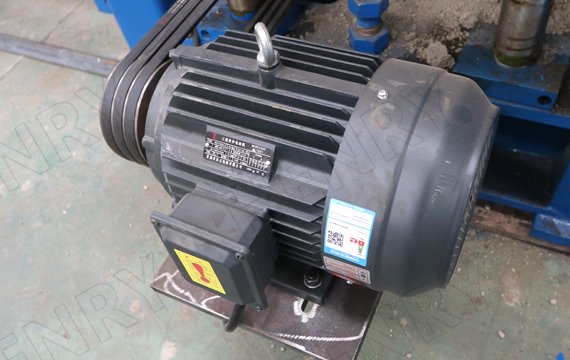
03.Vibration motor
The vibratory motor converts electrical energy into mechanical vibration for the QT4-15 concrete block maker machine. The magnitude of the vibration force determines the vibration intensity; strong vibration ensures the high quality of the hollow concrete bricks produced by the QT4-15 concrete block maker machine. The vibration frequency also determines the molding efficiency of the QT4-15 concrete block making machine price. HENRY equips the QT4-15 block machine with Siemens motors or “SHANBO” vibratory motors, guaranteeing product quality.
04.Solenoid valve
After receiving electronic signals from the PLC control box, the solenoid valve of the QT4-15 concrete block maker machine controls the hydraulic cylinder to work by switching on and changing the flow of hydraulic oil. Therefore, the solenoid valve plays a role in controlling the rhythm during the production of hollow concrete bricks in the QT4-15 concrete block machine price. The solenoid valve equipped in the QT4-15 manual block making machine has a fast response speed, good sealing performance, low failure rate, strong environmental adaptability, and strong waterproof and dustproof capabilities.

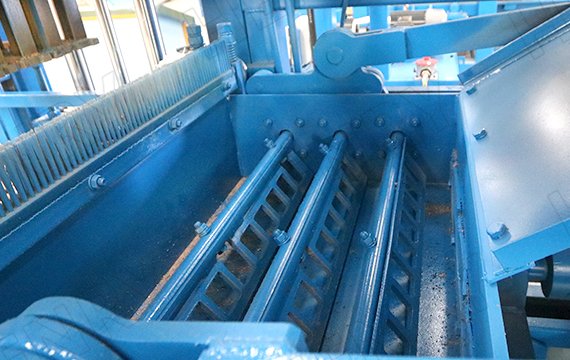
05.Material Feeding Track
The concrete placement system is the final and most crucial step in the raw material transportation process for the QT4-15 concrete block maker machine. Using a robotic arm, it evenly fills the molds with concrete raw materials from the delivery truck, preventing insufficient filling. The QT4-15 block making machine’s concrete placement system is constructed from wear-resistant, high-strength steel, possessing excellent abrasion resistance and corrosion resistance.
06. Hydraulic tube
Hydraulic hoses are a crucial component of the QT4-15 automatic concrete block making machine hydraulic system. During the production of hollow concrete bricks, the hydraulic pressure typically reaches 15-25 MPa. Therefore, we select hydraulic hoses that are resistant to high temperatures and pressures, and have excellent sealing properties. The internal structure of the hydraulic hoses consists of multiple layers of wound steel wire, allowing them to withstand a maximum pressure of 35 MPa and exhibiting excellent anti-pulse performance. The rupture of even a single hydraulic hose can render the entire QT4-15 concrete block maker machine production line inoperable; therefore, selecting high-quality hydraulic hoses is essential.

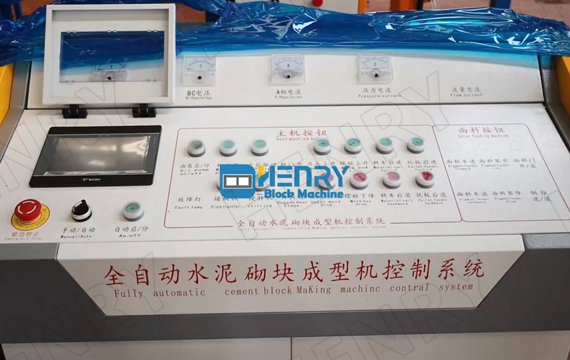
07. PLC electric control box
The PLC control box is the control center of the QT4-15 concrete block maker machine and the core component for automated concrete brick production. It integrates the hydraulic, electrical, and vibration systems into a highly efficient whole, precisely controlling each production step. This precise operation reduces the risk of errors caused by manual operation. The display language of the QT4-15 automatic concrete block making machine’s PLC control box can also be customized according to customer needs.
Advantages and selling points of QT4-15 concrete block maker machine


Construction workers used concrete blocks produced by QT4-15 concrete block maker machine to build houses
- Real pictures from the scene

Some concrete blocks pictures and parameters (6)
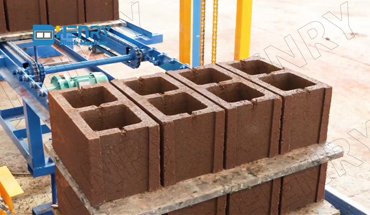
Size:400×200×200mm
4 pieces per mould
960 pieces per hour
7680 pieces per 8 hours
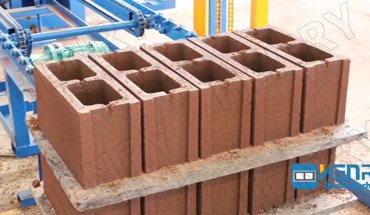
Size:400×150×200mm
5 pieces per mould
1200 pieces per hour
9600 pieces per 8 hours
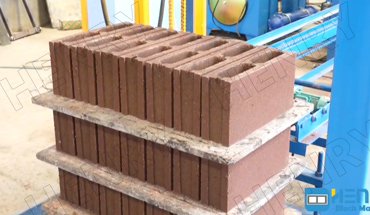
Size:400×100×200mm
7 pieces per mould
1680 pieces per hour
13440 pieces per 8 hours
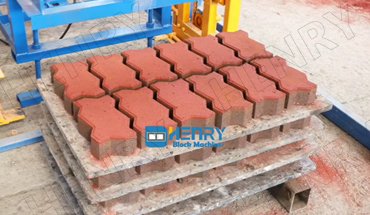
Size:225×112.5×60mm
14 pieces per mould
3360 pieces per hour
26880 pieces per 8 hours

Size:200×100×60mm
14 pieces per mould
3360 pieces per hour
26880 pieces per 8 hours

Size:200×163×60mm
8 pieces per mould
1920 pieces per hour
15360 pieces per 8 hours

One QT4-15 concrete block maker machine can produce hollow concrete blocks of different sizes
- How to compare QT4-15 VS QT4-20 two hydraulic concrete block maker machine with different performance?
- How strong a concrete hollow block is ! Made by QT4-15 automatic concrete block making machine
- QT4-15 hydraulic automatic concrete block making machine test cement blocks for Malawi buyer
- Why more block machine buyers prefer QT4-15 concrete block maker machine ?
What is the raw material ratio for producing concrete bricks using QT4-15 concrete block maker machine?
In the raw materials used by the QT4-15 concrete block maker machine to produce concrete bricks, sand accounts for the largest proportion (50%), serving as a filler in the framework structure of the concrete bricks. The second largest component is aggregate, accounting for 35%. Aggregate, with its larger particle size, provides the framework and enhances the strength of the concrete bricks. Cement accounts for 10% and water for 5% of the raw materials used in the QT4-15 concrete block making machine. Cement, as the core component of concrete, undergoes a hydration reaction when it comes into contact with water, binding the sand and aggregate together to form stable, high-strength concrete bricks.

Photos of customer visits to our factory and engineers visiting customer sites.


What equipment is needed for a complete QT4-15 concrete block maker machine production line? (5)

Weighing Bucket Capacity(L) 1200L Storage Hopper Capacity(m³) (2-4)×3.5 Theoretical Productivity(m³/h) 56 Proportioning Accuracy ±2% Maximum Weighing Value(kg) 3000 Number Of Batching Species Two-four Feeding Height(M) 2.9 Feed Belt Speed(m/s) 1.25 Power(kw) (3-5)×3 Overall Weight(kg) 3500-5000 Outline Dimension(mm) (6100-12200)×2200×2680 
Mixing motor power 18.5kw Boost motor power 5.5kw Pump motor power 0.55kw Discharge capacity 500L Feed capacity 800L Efficiency ≥28m³/h Rotating speed of stirring blade 23r/min Hopper lifting speed 18m/min Maximum particle size of bone particles 10mm/8mm Discharge height 1.8-4.5m 
Overall size 8000*700*500mm Weight 250kgs Motor power 2.2kw Belt type “V” type complete Conveyor speed 1.2m/second Stories double Steel material angle iron Assembly method detachable Belt material rubber belt wire 
Overall size 2500*1770*2400mm Power 3kw Speed 0.5m/s Stacker Layer 3-4 layers Weight 1500kgs Stacking Method clamp handle Stacking Accuracy 5mm 
item value Material Flax fiber Enter type 4-Way Type pallets for block machine Raw Material fiber and flax Bending Strength more than 60N/mmˆ2 Flexural Modulus more than 4.5*10ˆ3Mpa Impact Strength more than 60KJ/mˆ2 Temperrater tolerance 80-100℃ Thickness 15-50 mm At customer’s request Width/Length At customer’s request
First, customers need to consider their required output and brick type. For example, the QT4-15 concrete block maker machine can produce 7,680 8-inch hollow concrete bricks in 8 hours. If customers have higher output requirements, they can consider the QT6-15 automatic concrete block making machine, which has a daily output of 11,520 8-inch hollow concrete bricks. Secondly, customers need to determine the molds based on the desired brick type. The quality of the molds has a significant impact on the production of concrete bricks. If the molds are deformed or severely worn, they will be unusable. Therefore, we have always attached great importance to mold quality. The molds for the QT4-15 block making machine undergo advanced processing techniques such as carburizing, quenching, and wire cutting, resulting in molds with a strength of over 60 HRC, guaranteed to withstand 200,000 consecutive uses without deformation.
The QT4-15 concrete block maker machine is a modern, fully automatic, and intelligent multi-functional production line with diverse functions and a high degree of automation. It can produce not only hollow concrete bricks of various sizes but also solid bricks, including paving bricks for sidewalks, lawn bricks for parking lots, curb stones for roadsides, and colored paving bricks, all simply by changing the corresponding molds. We have a concrete block making machine price list. If you are interested in the QT4-15 concrete block machine manufacturer, please feel free to email us for inquiries.
The QT4-15 concrete block maker machine fully automatic production line requires, in addition to the QT4-15 concrete block making machine price list, a Concrete PLD 1200 dosing machine, a JS500 Forced Concrete Mixer for mixing concrete raw materials, an 8-meter-long conveyor machine for transporting concrete raw materials, a Double pallet stacking machine, a Fiber Pallet, and a 3-ton forklift.
The answer is no. While cement plays a crucial role in the strength of concrete bricks, adding too much can actually have negative effects.
First, cement is expensive, and adding too much will inevitably increase costs, leading to lower profits. Second, excessive cement use results in a violent hydration reaction, which can cause the concrete bricks to crack, reducing their strength and durability. Therefore, during the production of concrete bricks, it is essential to strictly adhere to the raw material ratios provided to ensure the production of high-quality concrete bricks.
The production of concrete bricks has a history of over 100 years. As early as 1850, the British produced concrete bricks by manually pouring concrete. In 1900, American Harmon S. Palmer invented the first manual block making machine price, but its production efficiency was still very low, producing only about 10 concrete bricks per hour. From 1945 to 1980, the concrete block maker machine began to industrialize, significantly improving both the quantity and quality of concrete bricks. Furthermore, steam curing kilns began to appear, which was crucial for shortening curing time and improving the quality of concrete bricks. In 1981, China’s first automatic concrete block making machine with a PLC electrical control box was born, marking the beginning of the automation and intelligent era in concrete brick production.
Post-production curing is crucial for concrete blocks produced by the QT4-15 concrete block maker machine. The purpose of curing is to ensure the complete completion of the hydration reaction in the concrete bricks. Currently, the most common curing method is natural curing, which is low-cost but highly susceptible to temperature and humidity fluctuations. The correct curing method is to cover the concrete bricks with plastic film after production and water them 2-3 times daily to keep them moist. If the local temperature is high, the watering frequency can be increased appropriately. The curing process lasts approximately 28 days, completing the curing process for the concrete bricks.
Firstly, there are requirements for the storage site. The site must be hardened, flat, and solid, with good drainage around the perimeter to prevent water accumulation. A rain shelter should be erected to prevent rainwater from seeping in. Secondly, there are requirements for the stacking method. The stacking height of paving bricks and solid bricks should be less than 1.8 meters, and the stacking height of hollow concrete bricks should be less than 1.5 meters. If the temperature drops below 5℃, we recommend taking insulation measures.
 English
  Russian
  Spanish
  Arabic
  French