


Cameroon, located in Central Africa, boasts a diverse landscape, including rainforests, grasslands, deserts, and mountains. Forests cover approximately 46% of its total land area. Cameroon is often referred to as “Little Africa,” a microcosm of Africa’s rich tapestry. Its manufacturing and agricultural sectors are highly developed, ranking first in Central Africa. Currently, Cameroon focuses on agricultural processing, road and housing infrastructure, and new energy sources. This rapid economic growth and urbanization, particularly following the establishment of diplomatic relations with China in 1971, have been a significant development opportunity.
In 2010, the Cameroonian non-profit organization Aumazo Inc. purchased a Hydraform earth blocks machine. After two years of learning and research, in 2012, they used the Hydraform machine to produce compressed earth and successfully built a library using them. This marked the beginning of Cameroon’s adoption of compressed earth blocks and its first successful case, providing Cameroon with a completely new building material. Compressed earth is made by pressing soil, so what is the quality of Cameroonian soil, and is it suitable for producing earth blocks? Next, HENRY will reveal the secrets of Cameroon’s soil.

First, we analyzed the soils of central Cameroon (including the capital, Yaoundé).
The soil in this region was formed by the weathering of ancient bedrock and the influence of a tropical climate. The bedrock is mainly Precambrian metamorphic rock, weathered over millions of years. Combined with the region’s equatorial location and its hot, rainy climate (average annual temperature 24°C, annual rainfall 1000-2000 mm), the prolonged hot and rainy conditions caused the loss of elements such as silicon and calcium from the rocks. During the dry season, insoluble elements like iron and aluminum accumulated, forming the red iron-rich soils very common in this region.
We studied the soil composition of three sites in central Cameroon: Mbalmayo, Mengang, and Nkolbisson. We found that the sandy particles in this region were predominantly quartz, while the clayey particles were mainly kaolinite and iron oxides. The mineral composition was dominated by diopside and feldspar. The red soil in this region is very deep, exceeding 10 meters in thickness, and is richly vegetated, exhibiting good water retention and high moisture content.
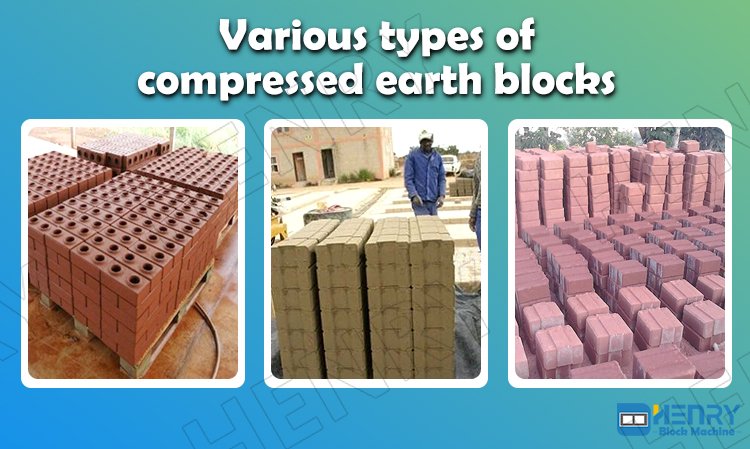
According to the latest research from Cameroonian research institutions in 2024, the soil in this region has a maximum water content of 54%, a density of 1.35 g/ml (moderate density), and a pH of 4.8, making it slightly acidic. The soil contains a large amount of iron oxide and aluminum oxide, which act as natural hardeners and play a crucial role in enhancing the strength of compressed earth blocks. Sand particles account for 45% of the soil, providing a framework for the earthen blocks, while cohesive particles make up 31%, a ratio very close to the optimal mix for producing earthy blocks.
Wikipedia also records that the red iron-rich soil in central Cameroon (including the capital Yaoundé) is unsuitable for growing crops, but is ideal for building materials. When producing compressed earth, the Yaoundé-Dubai Expressway project can be used as a reference; the optimal moisture content is controlled at 15%-20%, and attention should be paid to maintaining moisture during the later curing process.
In conclusion, the red iron-rich soils of central Cameroon (including the capital Yaoundé) are ideal for producing compressed earth and are among the best raw materials available.
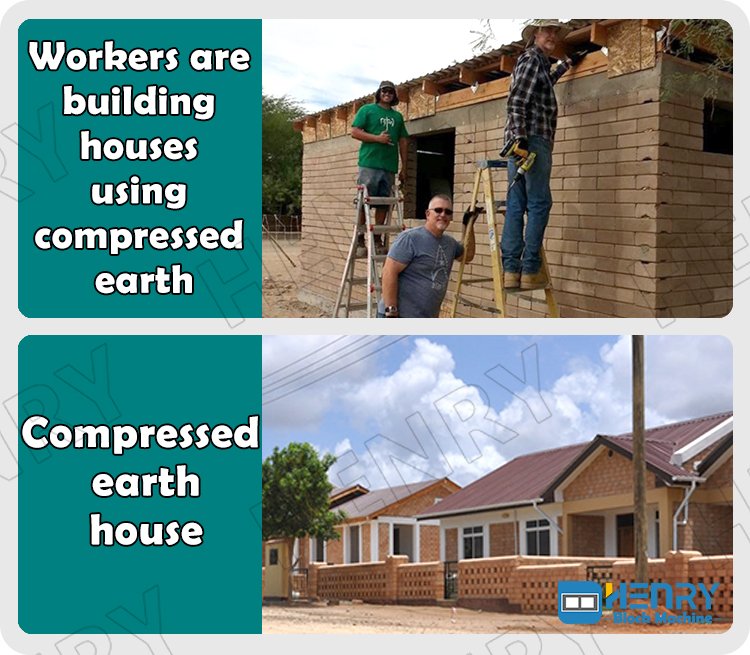
Next, we shift our focus to the Adamawa Region in Cameroon (such as the Ngaoundal area).
The soils in this region have high levels of silica, iron oxide, and aluminum oxide, making them typical silica-iron-alumina red soils. Silica is the most abundant component, averaging 36%, making it the dominant element. Iron oxide is the second most abundant, averaging 31%, and its high content is a significant reason for the red color. Alumina also accounts for 17%, making it a major mineral component in clay soils.
Cameroon’s Adamawa Region (including areas like Ngaoundal) is located in the Pan-African Orogenic Belt and is rich in granite. This granite contains abundant feldspar and quartz, and under the influence of tropical heat and rainfall, it has undergone laterization. During the rainy season, rainwater decomposes soluble elements such as CaO, MgO, and K₂O. During the dry season, iron and aluminum oxides such as Fe₂O₃ and Al₂O₃ are less soluble and accumulate, forming the local red soil. This is evidenced by a chemical alteration index of 96%.

According to the latest academic research in Cameroon in 2025, the soil in Cameroon’s Adamawa Region (such as the Ngaoundal area) is highly suitable for producing compressed stabilized earth blocks. The soil in this region is predominantly sandy, with 25% clay particles, a moderate plasticity index of 25%, and very low expansibility, as low as 0.05%. The soil has high load-bearing capacity, with a CBR value reaching 80%-95%, indicating very high strength, fully meeting the load-bearing requirements of houses and residences, achieving an S5 load-bearing capacity.
In this region, compressed earth are produced by directly excavating and using the soil, then adding 8%-10% cement, with the moisture content controlled at 10%-13%. Historically, the region has a tradition of using soil materials for house construction; for a long time, local residents used red soil and handcrafted bricks to build their homes. Nowadays, modern clay brick machine use powerful pressure to press local soil and cement into shape, producing earth terminal blocks with significantly greater strength and lifespan than those made by hand by local residents.

Next, we will explore the soil conditions in the Western Highlands of Cameroon (such as Mount Bambouto).
The soils in this region are primarily influenced by volcanic activity and altitude, resulting in unique stratification. Based on altitude, the soils form three vertical zones. First, there are the high-altitude mountain areas above 2,000 meters, where the soils are influenced by volcanic ash soilification, primarily consisting of typical dark-colored orogenic loess and stony dark-colored orogenic loess, exhibiting volcanic ash characteristics. Next is the central mountain area at 1,700-2,000 meters, where the soils are influenced by both volcanic ash soilification and iron-aluminum oxidation. Finally, there are the low-altitude mountain areas at 1,400-1,600 meters, where the soils are dominated by iron-aluminum oxides. In the deeper layers of the soil at lower altitudes, iron-aluminum oxide soils have formed, a characteristic of aging soils in tropical regions.
The soils of the Western Highlands in Cameroon (such as Mount Bambouto) are rich in minerals, especially silica, alumina, and iron oxide. Under the influence of the tropical mountain climate, the volcanic rocks in this region have undergone tens of thousands of years of weathering and soil formation, resulting in unique soil types rich in minerals such as quartz and kaolinite, with distinct altitudinal soil zonation.

Based on our research and analysis of the soils in the western highlands of Cameroon (including the Bambuto Mountains), Henry believes that the soils in this region are very suitable for producing compressed earth blocks.
Firstly, the mineral composition of the soil in this region perfectly meets the requirements for producing compressed earth. The soil is primarily composed of kaolinite, which is stable when exposed to water, preventing the produced rammed earth blocks from cracking. The soil also has a high content of alumina and iron oxide, which act as natural stabilizers, improving the plasticity and durability of the stabilized earth blocks. Furthermore, this type of soil is widely distributed in this region, with deep soil layers and large reserves.
In 2023, Cameroonian geological experts studied the region’s soils and pointed out that the weathered soils were promising for the production of interlocking compressed earth blocks (CEB), and provided methodological guidance. The ability to source soil directly from the construction site is one of the core advantages of earthing blocks production: “local sourcing.”

HENRY offered three suggestions to customers producing compressed earth in the region. First, prioritize low-altitude soils rich in iron and aluminum oxides, and when excavating, use soil layers at least 20cm deep, avoiding humus layers. Second, add 8%-10% cement to the raw materials for earth retaining blocks. Due to the high iron oxide content in the soil, consider reducing cement usage and maintaining a moisture content of 10%-16%. Third, during the rainy season, the soil moisture content increases dramatically; HENRY recommends drying the soil after excavation before using it in earth block production.
Finally, we turn our attention to the soils of the Sudano-Sahelian region (the northern arid zone) in Cameroon.
The Sudano-Sahelian region (northern arid zone) of Cameroon is characterized by low rainfall, with an annual precipitation of only 600-900 mm. The dry season is long, lasting from October to May of the following year. The average annual temperature is 28°C-30°C, and intense evaporation leads to the formation of secondary carbonates. The region boasts a diverse range of rock types, including Precambrian rocks, granite, and volcanic rocks. The flat terrain facilitates water accumulation, resulting in the formation of montmorillonite.

Modified soils are mainly distributed in the Sudano-Sahelian region (northern arid zone) of Cameroon, such as the Laf Forest Reserve. These soils are predominantly montmorillonite, with a clay content exceeding 40%, a high plasticity index, and significant shrinkage and expansion. Besides modified soils, this region also contains sandy soils, basalt soils, and alluvial soils. Sandy soils are mainly found in the Zamai Forest Reserve, characterized by sandiness, low clay mineral content, and good drainage. Basalt soils are found in the Mobono region, containing abundant quartz, potassium feldspar, plagioclase, and montmorillonite, with a pH of 6-8. Alluvial soils are mainly found in the Guiring Experimental Farm, primarily composed of sand, with a neutral pH and low organic matter content.
Is the region’s soil type, which is very diverse, suitable for producing compressed earth?
First, there’s the alluvial soil distributed at the Guiring experimental farm. This soil is primarily composed of sand, which provides a framework for earth stone blocks. Its pH is 6.9, neutral, suitable for hydration with cement, and its low organic matter content won’t affect the strength of the earth vellumental blocks. Overall, alluvial soil is very suitable for producing earth stabilized blocks using a clay brick machine.

Secondly, there’s the unrefined soil from the Mobono region. According to the latest research data from Cameroonian local government agencies in 2025, the soil’s mineral composition is mainly quartz and potassium feldspar, with a neutral pH, making it suitable for producing electrical earth blocks. Finally, there’s the modified soil from the Laf Forest Reserve. This soil is dominated by montmorillonite minerals, has a high content of clay particles (over 40%), and exhibits significant shrinkage and expansion. Henry does not recommend using modified soil for producing earth vellumental temple blocks.
According to our analysis, most of Cameroon’s soils are ideally suited for compressed earth production
The central, Adamawa, western highlands, and southern regions of Cameroon contain abundant laterite and ferruginous clays, primarily composed of quartz and ferruginous oxides, making them among the best raw materials for insulated earth block production. Furthermore, Cameroonian government agencies possess detailed data and practical experience regarding local soil composition and optimal mix design.
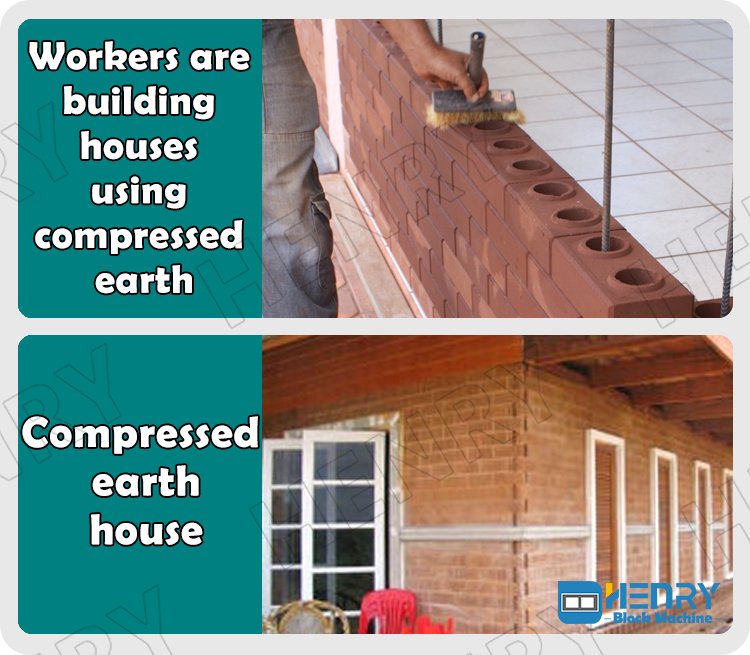
Currently, Cameroon’s construction industry is developing rapidly, and it is projected to grow at an annual rate of 6.5% by 2030. In 2025, the Cameroonian government invested $3 billion, and the European Union provided $96 million to support road, housing, and public infrastructure construction in Cameroon. Simultaneously, the Cameroonian government introduced a fiscal law for 2026 that will restrict cement imports, protect the development of local building materials such as compressed earth, create greater market demand for earth blocks, and encourage local manufacturers to prioritize the purchase of domestic building materials.
Globally, environmentally friendly building materials, primarily compressed earth blocks, are on the rise, with the clay brick market projected to reach $3.3 billion by 2035. The huge market potential of clay bricks stems from the increasing environmental awareness worldwide, as well as the advantages of low energy consumption and low price in clay brick production. Furthermore, CIMC Group’s office building project in Yaoundé, Cameroon, successfully demonstrated the feasibility of earth blocks. Therefore, the future development prospects of earth block technology in Cameroon are undoubtedly very broad.

FAQ
01. Are houses built using compressed earth in Cameroon safe? How strong are they?
The Cameroonian government has established standards for the strength of earthen blocks, with a minimum compressive strength of greater than 4 MPa. Cameroon’s superior soil conditions, combined with a scientifically formulated raw material mix, and the use of powerful brick-making machines followed by proper curing, result in earthy blocks with a strength of 8-15 MPa, far exceeding Cameroon’s official standards. Furthermore, the compressed stabilized earth blocks can be mechanically interlocked during construction, forming a unified structure. Clay bricks also possess fire-resistant and heat-insulating properties. Therefore, housing built with earth terminal blocks in Cameroon is not only safe but also aesthetically pleasing and comfortable.
02. How many stories can you build using earth block?
The maximum number of stories a house can be built using compressed earth depends on the intended use of the bricks. For example, the commonly used 230*220*115mm compressed earth blocks are perfectly suitable for use in load-bearing walls of single-story or two-story houses. For three-story or higher houses, Henry recommends using earth blocks for infill walls, partitions, and frame infills, where they can effectively utilize their sound insulation and rapid construction advantages.

03. How well do earth blocks house built with compressed earth perform in terms of fire resistance, sound insulation, and heat insulation?
Earth blocks house built with earth blocks have excellent fire resistance. Earthen blocks are made by pressing soil and cement together, containing no combustible materials. According to fire resistance tests conducted by international building organizations, a 220mm thick wall made of earthy blocks has a fire resistance limit of 3-4 hours, demonstrating outstanding fire resistance.
Secondly, compressed stabilized earth blocks offer excellent thermal insulation. The thermal conductivity of walls built with clay bricks is 0.8-1.2 W/m·K, superior to concrete bricks and close to that of traditional fired bricks. In Cameroon’s hot tropical climate, houses built with earth terminal blocks can reduce air conditioning usage by 30%.
Finally, rammed-earth blocks provide excellent sound insulation. A 220mm thick wall made of earth block achieves a sound insulation of 50-55 dB, a very significant effect. Because earth blocks are solid and interlocking, they offer strong integrity and no gaps, providing excellent sound insulation against low-frequency noise.
04. What is the lifespan of compressed earth?
The University of the Witwatersrand in South Africa has proposed standards for measuring the durability of compressed earth blocks, including their compressive strength, abrasion resistance, and water absorption resistance. In 2020, an international building organization confirmed that adding a scientifically proportioned amount of cement to the raw materials used to produce earth blocks is a key factor determining their lifespan. Earth block were first used in 1988, and houses built with them in South Africa have been in good condition for nearly 40 years. Therefore, the lifespan of earthen blocks is at least 50 years.
05. How to scientifically maintain clay bricks
First, cover the freshly produced clay bricks with plastic film to prevent excessive moisture evaporation and incomplete hydration, which could cause the bricks to crack. Second, water them regularly 2-3 times a day, using a spray bottle to evenly mist them. Continue this curing process for at least 7 days. For maximum strength, HENRY recommends curing for approximately 25 days.
 English
  Russian
  Spanish
  Arabic
  French